Anúncios
Can virtual reality games change the way we treat upper limb injuries? They make recovery fun and effective. Virtual reality (VR) is becoming a key player in therapy, offering exciting experiences and tracking progress closely.
VR uses neuroplasticity to help patients recover better and faster. It makes therapy more enjoyable and helps patients stick to their treatment plans. This new approach is transforming how we care for those in need of rehabilitation.
Anúncios
Introduction to Virtual Reality in Rehabilitation
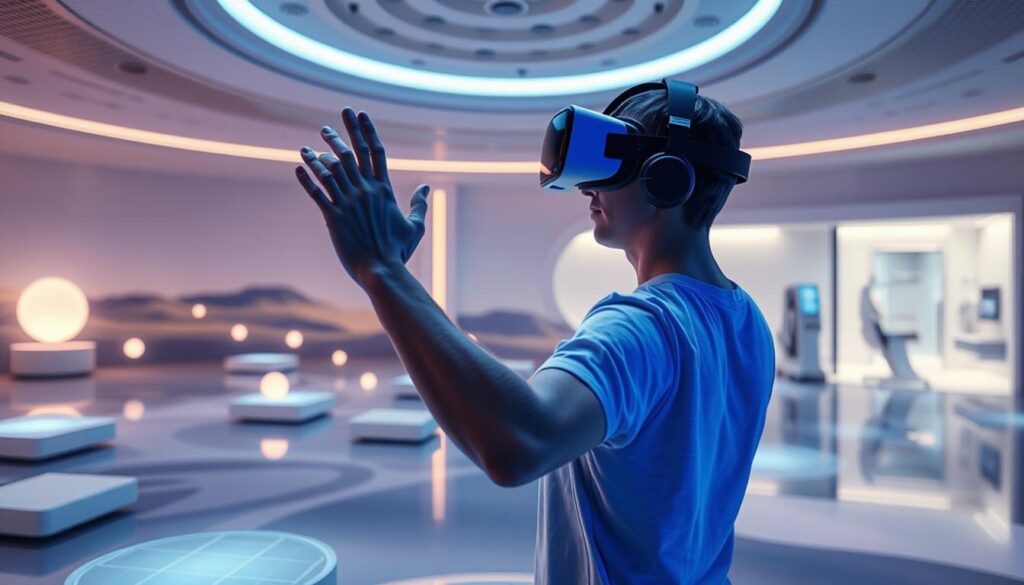
Virtual reality in rehabilitation is a new way to help patients get better. It uses technology to make therapy more fun and effective. This method lets doctors create special worlds for each patient to help them heal.
Virtual reality makes therapy more exciting. It turns boring exercises into fun adventures. This makes patients more motivated and focused, which is key for recovery.
As virtual reality grows, it’s changing therapy in big ways. It’s not just about physical health anymore. It also helps with feelings and the mind. Patients love therapy more when it’s interactive and fun.
Anúncios
The Need for Engaging Rehabilitation Solutions
Traditional rehab often uses boring exercises that lose patients’ interest. This can make it hard for people to stick with their rehab plans. We really need new, exciting ways to help people recover.
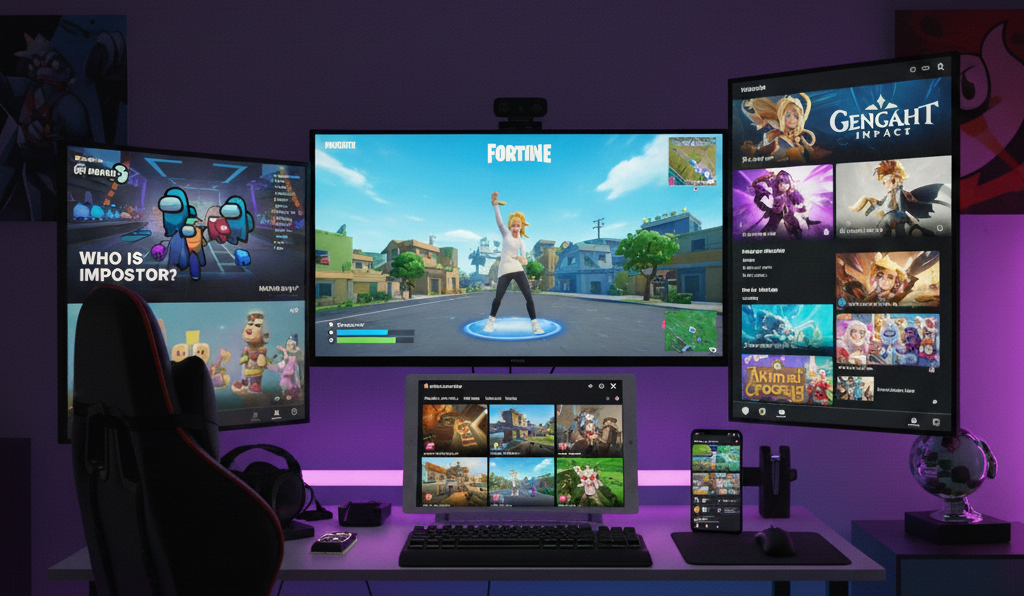
Virtual reality (VR) brings fun to rehab by turning dull tasks into games. It makes rehab feel like a game, not a chore. This makes patients more eager to join in and have fun while they heal.
Keeping patients motivated is key. Good rehab programs should make people want to show up and do their best. VR is a game-changer because it keeps patients engaged and excited about their progress.
Understanding Upper Limb Rehabilitation Challenges
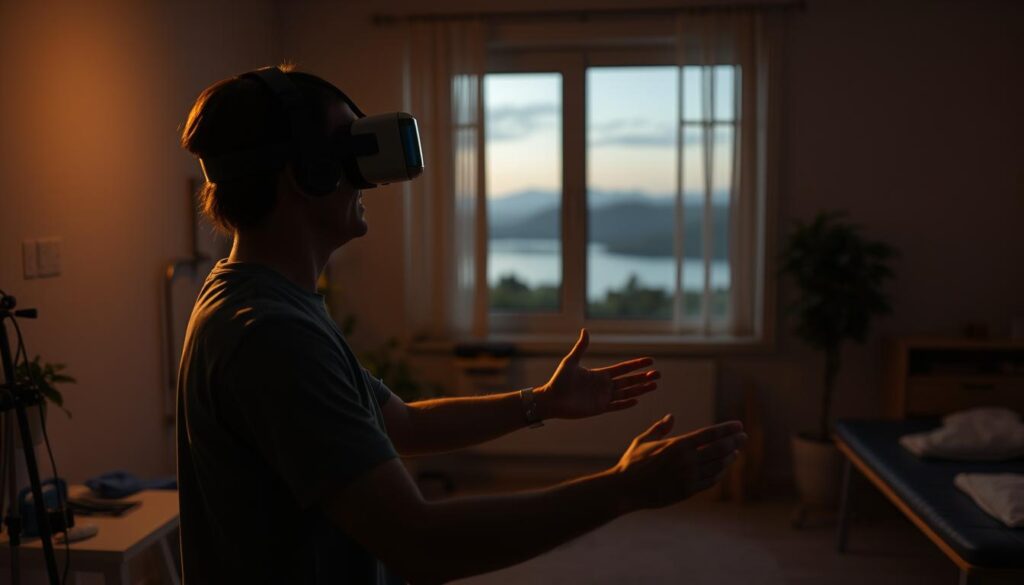
Rehabbing the upper limbs is tough, especially after injuries or surgeries. People often struggle with limited mobility, chronic pain, and mental hurdles like low motivation. These issues can slow down recovery and affect therapy progress.
Many face trouble moving due to weak muscles or stiff joints. Pain can also stop people from doing needed exercises. Plus, the routine of traditional therapy can make patients lose interest. This mix of physical and mental hurdles makes recovery longer.
New tech, like virtual reality (VR), is showing promise. VR-based therapies make exercises feel like games. This approach can boost motivation and speed up recovery, making therapy more fun and effective.
The Role of Neuroplasticity in Recovery
Neuroplasticity is key in brain recovery after injuries or illnesses. It lets the brain change and make new connections. This is crucial for good rehabilitation results.
Therapies like virtual reality (VR) boost neuroplasticity. They offer interactive experiences that keep patients engaged in their recovery. This helps a lot.
Research shows that active participation in recovery improves motor function. VR therapy creates a space for learning and adapting. It helps with cognitive recovery too.
When patients play games that challenge them, they stimulate their brains. This helps grow new pathways for recovery.
What is Upper Limb VR Therapy with Progress Tracking
Upper limb VR therapy uses advanced tech to help people recover. It creates virtual worlds for patients to practice movements. This makes therapy feel like a game, helping restore motor skills and coordination.
Tracking progress is a big part of this therapy. It lets therapists see how patients are doing right away. This data helps adjust therapy plans for better results.
When therapy feels like a game, people stick with it more. This approach makes rehab fun, not a burden. It helps build strong neural pathways for recovery.
Benefits of Virtual Reality for Upper Limb Rehabilitation
Virtual reality therapy offers many benefits, especially in making patients more engaged and motivated. It uses technology in a way that grabs patients’ attention. This makes them want to be part of their recovery journey, leading to better upper limb function.
Increased Motivation Through Gamification
Gamification in therapy changes how we do rehab by adding game elements. It makes therapy feel like a game, where patients feel a sense of accomplishment. This makes patients more eager to join in, boosting the benefits of VR therapy.
By making rehab fun, patients are more likely to stick to their treatment plans. This leads to better results in their recovery.
Enhanced Repetition and Engagement
Virtual reality therapy also helps with repetition. It allows for lots of practice in one session, without getting boring. The games keep patients focused and interested, helping them learn better.
This regular practice helps improve upper limb function. It’s a key part of successful rehab.
| Feature | Traditional Therapy | VR Rehabilitation |
|---|---|---|
| Motivation | Moderate | High |
| Repetitions in a Session | Limited | Hundreds |
| Patient Engagement | Passive | Active |
| Feedback Mechanism | Delayed | Real-time |
Types of Virtual Reality Games for Rehabilitation
Virtual reality rehabilitation is becoming more popular. It’s fun and helps patients get better faster. There are many VR games, but two main types are target-based games and fine motor dexterity training. Each type helps patients in different ways during their recovery.
Target-based Games for Daily Living Skills
Target-based VR games make patients practice everyday tasks. They work on skills like reaching and grasping. These games are fun and help patients practice over and over.
Patients move through virtual worlds. They learn to interact with targets in a way that helps them in real life. This makes them better at doing daily tasks.
Fine Motor Dexterity Applications
VR games for fine motor dexterity focus on small hand movements. They help with hand coordination and grip strength. Players do detailed tasks in a virtual world.
This practice improves dexterity and function in daily life. Regular use of these games leads to better motor skills. This is key for becoming more independent.
| Type of Game | Focus Area | Benefits |
|---|---|---|
| Target-based VR Games | Daily Living Skills | Enhances real-life task performance; builds confidence. |
| Fine Motor Dexterity Training | Hand Coordination | Improves precision and grip strength; fosters independence. |
The Science Behind VR Rehabilitation
VR rehabilitation uses technology and proven therapy methods to help people recover. Studies show that immersive experiences can improve patient results in therapy. This makes therapy fun and encourages people to practice more.
Virtual reality works with the brain’s ability to change after injury. Patients do tasks in virtual worlds that are like real life. This helps them physically and mentally recover.
Research shows that VR can target specific motor skill problems. Therapy uses virtual feedback to help patients see how they’re doing. This feedback motivates them and helps therapists track their progress.
VR rehabilitation changes how we recover from injuries. It offers new ways to overcome physical and mental barriers to healing.
Clinical Studies: Efficacy of VR in Motor Recovery
VR clinical studies show VR’s promising role in motor recovery. They find VR boosts motor recovery for stroke and brain injury patients. Studies show VR improves motor function better than old methods.
VR’s immersive experience is key. It makes exercises fun, not boring. This boosts motivation and consistency in patients, leading to better recovery.
Many VR studies show it improves strength, coordination, and movement. VR is changing how we rehab. It’s making treatments more effective. This encourages more use of VR in clinics and opens doors for more research.
Real-time Feedback and Its Importance
Real-time feedback in therapy is key to making rehab programs better. It lets patients see and hear how they’re doing right away. This helps them learn new skills faster.
Tools with feedback in virtual reality help a lot with learning to move. They show patients how they’re doing, helping them get better. This makes therapy more effective.
When therapy is fun and gives feedback right away, patients stick to it more. Seeing their skills improve motivates them. This makes therapy more enjoyable and effective.
| Feature | Traditional Therapy | VR Therapy with Real-time Feedback |
|---|---|---|
| Immediate Correction | Delayed feedback from therapists | Instant feedback to adjust movements |
| Engagement | Less interactive | Interactive and immersive experience |
| Tracking Progress | Manual tracking | Automated progress tracking with visual aids |
| Motivation Levels | Variable, dependent on therapist | High, due to gamified elements |
Adapting VR Therapy to Individual Needs
Personalized VR therapy is a big step forward in rehab. It tailors therapy to each patient’s needs, making treatment more effective. Clinicians adjust the difficulty and tasks based on real-time progress, ensuring the therapy fits each person’s journey.
Personalized Therapy Plans
Customized treatment plans are key to successful rehab. They keep the challenge right, helping patients grow without getting overwhelmed. Feedback from patients makes sessions more engaging, boosting motivation and sticking to the plan.
Personalized VR therapy adapts to each person’s changing needs. This marks a big change in how we approach rehab.
Gamification Elements that Boost Recovery
Gamification in rehabilitation is changing how we help patients recover. Virtual reality is making it more fun and engaging. Elements like points, levels, and rewards are key to this new approach.
Points systems give patients instant feedback on their progress. Levels make them feel like they’re achieving something. Rewards, whether virtual or real, keep patients motivated to do their exercises.
Studies show that gamification makes rehab more fun and helps patients reach their goals. It turns boring exercises into fun challenges. This helps patients stay positive and engaged in their recovery.
| Gamification Element | Description | Impact on Recovery |
|---|---|---|
| Points | A scoring system that rewards participation and achievement. | Encourages regular engagement and provides immediate feedback. |
| Levels | Stages of progression that patients can accomplish. | Creates a sense of achievement and motivates further effort. |
| Rewards | Tangible or virtual incentives for reaching certain milestones. | Enhances motivation, making the rehabilitation process enjoyable. |
Case Studies: Success Stories in VR Rehabilitation
Virtual reality has changed the game in upper limb rehabilitation. Many patients have seen big improvements. These success stories show how VR can make a big difference in recovery.
Take a stroke survivor who used VR therapy. They worked on regaining strength in their arm. The VR games helped them not just physically but also emotionally.
Another example is a program for those with traumatic brain injuries. Patients improved their fine motor skills with VR games. Therapists noticed a big boost in motivation during sessions.
VR is making a real difference in rehabilitation. Each success story shows VR’s power to change lives. It’s improving the lives of many people.
Challenges and Limitations of VR Therapy
VR therapy is promising for upper limb rehab, but it faces big challenges. One major issue is the high cost of VR systems. This can be a big problem for healthcare places, making it hard for them to get these new tools.
Another big problem is the limitations in technology. Many VR apps don’t meet the needs of all patients. Since everyone reacts differently, not everyone gets the same benefits. This makes it hard to use VR therapy widely.
Users also face technical issues, needing some tech skills to use VR. This adds stress for patients and healthcare workers, who already have a lot to do. Without proper training, VR therapy might not work as well as hoped.
To solve these problems, we need more research and better VR systems. We should work together to make VR therapy easier and more accessible. This way, we can help more people get better through rehab.
Future Directions for VR-Based Rehabilitation
The future of VR rehabilitation looks bright. It will grow as therapy technology improves. Artificial intelligence and machine learning will make VR therapy more personal. They can adjust treatment plans based on how a patient is doing.
Developers are working to make VR therapy easier to use. They’re creating virtual worlds that are simple for everyone to navigate. This means more people can use VR therapy, no matter their age or background.
Cloud-based VR systems could let patients do therapy at home. This could make it easier for people to get the help they need. It would save them from having to travel or find time for therapy sessions.
There’s a growing partnership between tech companies and healthcare providers. They’re working together to make sure VR therapy really works. This partnership will help prove that VR therapy is effective, making it more accepted by doctors and patients.
| Advancements in Therapy Technology | Expected Impact |
|---|---|
| Artificial Intelligence Integration | Enhanced personalization of therapy sessions through real-time feedback and adjustments. |
| Machine Learning Algorithms | Improved predictive analytics for patient recovery trajectories. |
| Cloud Computing | Increased accessibility for remote rehabilitation sessions. |
| Mobile VR Solutions | Greater flexibility allowing rehabilitation anytime and anywhere. |
As VR therapy technology gets better, so will patient results. Healthcare professionals need to keep up with these changes. This way, they can help patients get the most out of VR therapy.
Conclusion
Virtual reality (VR) is changing upper limb rehabilitation in big ways. It makes therapy more engaging and helps patients recover better. VR is becoming a key part of therapy, showing great promise for the future.
VR therapy is getting better all the time. It uses real-life simulations that meet each patient’s needs. This means therapy can be customized to keep patients motivated and moving forward.
VR technology brings new hope to those in rehabilitation. As it grows, it could make recovery more effective and enjoyable for everyone. This makes VR a vital part of modern therapy.
FAQ
What are the main benefits of using virtual reality in upper limb rehabilitation?
Virtual reality boosts patient motivation with games. It also increases repetition in therapy. Plus, it offers personalized experiences that meet each patient’s needs.
How does virtual reality enhance neuroplasticity in patients?
VR keeps patients engaged and motivated. This is key for the brain to adapt and create new connections. It helps improve motor skills and cognitive recovery after an injury.
What types of VR games are most effective for upper limb rehabilitation?
The best VR games for rehab are target-based games. They help practice daily tasks like reaching and grasping. They also improve hand coordination with precise movements.
How does progress tracking work in VR therapy?
VR therapy tracks progress in real-time. It monitors patient movements and performance. This allows for quick feedback and adjustments to therapy plans.
What challenges do patients face in traditional rehabilitation methods?
Traditional methods can be tough. Patients may face limited mobility, pain, and low motivation. These issues can slow down their recovery.
Are there any clinical studies that support the use of VR in rehabilitation?
Yes, studies show VR helps stroke patients more than traditional methods. They improve motor functions better with VR-based rehab.
How does real-time feedback enhance the VR rehabilitation process?
Real-time feedback in VR gives patients instant cues. This helps them adjust their movements. It makes learning easier and boosts therapy results.
What gamification elements can enhance patient engagement during therapy?
Gamification uses points, levels, and rewards in VR rehab. It makes therapy more fun and rewarding. This keeps patients motivated and engaged.
What future advancements can we expect in VR rehabilitation technology?
Future VR rehab might include AI, machine learning, and data analytics. These advancements will make therapy more personalized and accessible for everyone.