Anúncios
Can virtual reality games help those with Parkinson’s disease live better lives? This neurological condition affects over 1.5 million in the United States. The need for effective treatments is urgent.
This article explores how VR games can improve mobility in Parkinson’s patients. These games not only boost motor skills but also help patients become more independent. We look at how virtual reality games can turn mobility exercises into fun experiences. This can improve both physical and mental health.
Anúncios
Introduction to Parkinson’s Disease and Its Impact
Parkinson’s Disease is a chronic, progressive disorder that affects millions in the U.S. It causes tremors, rigidity, and balance issues. These symptoms make everyday tasks hard.
As the disease gets worse, these symptoms worsen. They make it tough to walk, balance, and do daily activities. This affects a person’s quality of life, making it hard to socialize and stay independent.
Over 1.5 million people in the U.S. live with Parkinson’s Disease. The challenges of this disease go beyond just moving. It also affects emotions and mental health.
Anúncios
Patients face difficulties with daily tasks, leading to more than just physical problems. It’s important to understand all the effects of Parkinson’s. This helps in finding better ways to help patients.
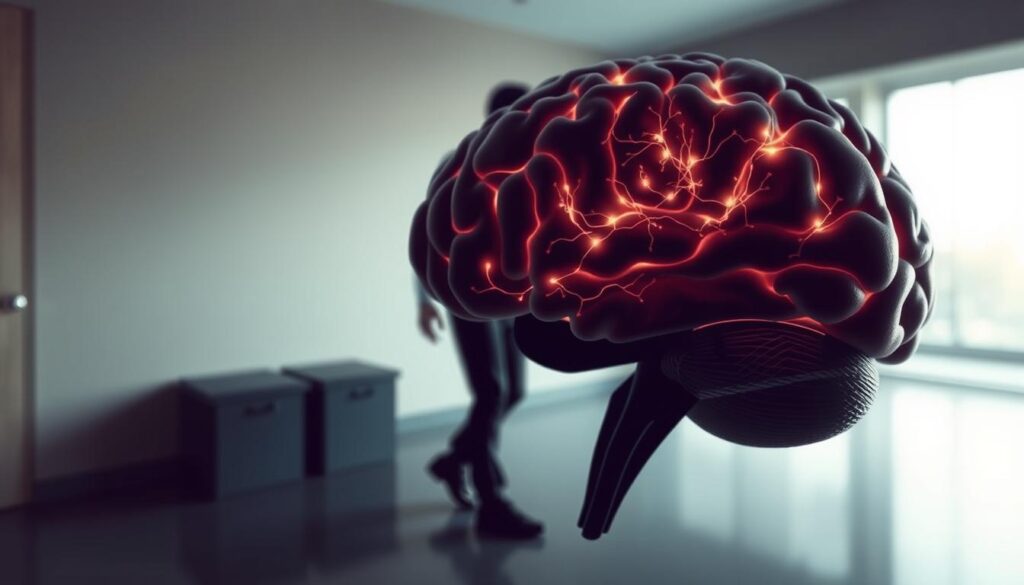
Understanding the Role of Virtual Reality in Rehabilitation
Virtual reality rehabilitation is a new way to help people with Parkinson’s disease. It uses simulated environments to make therapy more engaging. This way, patients can do exercises tailored to their needs.
Virtual reality helps with motor learning in a big way. It gives patients feedback as they go, helping them improve their skills. This feedback is key to mastering complex movements.
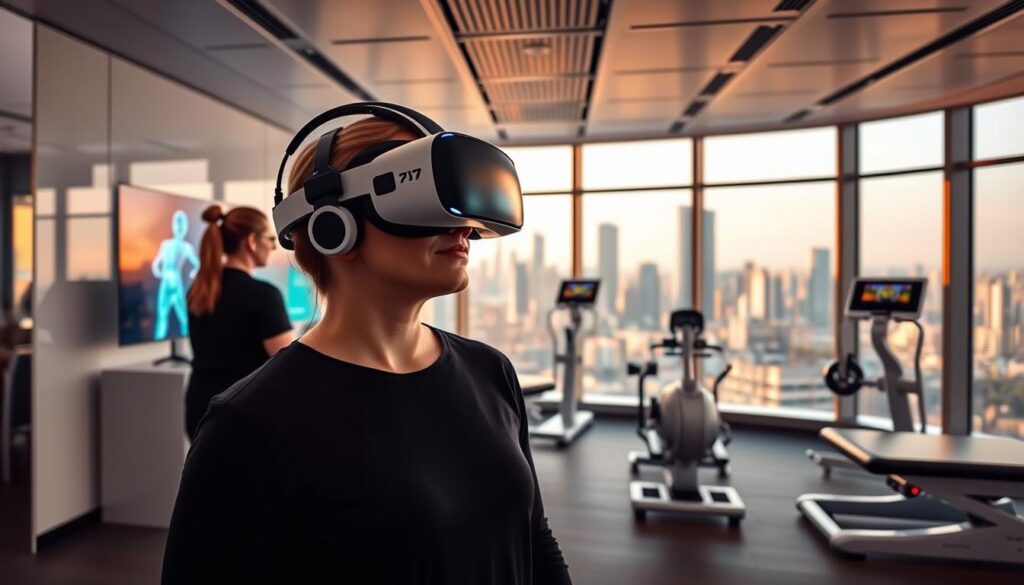
VR also makes therapy more fun, which is a big plus. It can make patients feel more excited about their treatment. This makes them more likely to stay involved and active in their recovery.
Benefits of Using VR for Mobility Improvement in Parkinson’s Patients
Virtual Reality (VR) offers new ways to help Parkinson’s patients move better. It makes therapy more fun and effective. VR lets therapists create personalized plans that help with motor skills training.
Enhanced Motor Skills Training
VR makes motor skills training better by using real-life activities. Patients practice tasks they do every day. This helps them feel more independent and confident.
The fun parts of VR make patients want to exercise more. This makes therapy even more effective.
Safe and Stress-Free Environment
VR is great because it’s safe for therapy. Patients can try movements that are hard in real life without risk. This makes them feel secure.
So, therapy with VR is calm and worry-free. Patients can focus on getting better without stress.
Types of VR Technologies Used in Rehabilitation
Virtual reality technologies are key in helping patients recover, especially those with Parkinson’s disease. There are different VR types, each offering unique experiences. Fully immersive and semi-immersive VR are two types that help patients heal and stay engaged.
Fully Immersive VR Experience
Fully immersive VR uses head-mounted displays (HMDs) to take patients into virtual worlds. This experience lets them practice movements in a safe space. It makes therapy more fun and helps patients stay motivated.
Patients get instant feedback and rewards, which boosts their confidence. This makes their rehabilitation journey more rewarding.
Semi-Immersive VR Solutions
Semi-immersive VR uses bigger screens or projectors for a fun experience. It keeps patients connected to reality. This is good for those who find fully immersive VR too intense.
It’s also great for group therapy, where patients can interact with others. Both VR types are effective in using devices that fit each patient’s needs. This makes therapy more accessible and personalized.
VR for Mobility Improvement in Parkinson’s Patients
Virtual reality technology has made big strides in helping Parkinson’s patients move better. It’s now part of rehab programs, leading to big wins in balance and daily activities. This means patients can do more on their own.
Improvement in Balance Function
Studies show VR is key in boosting balance for those with Parkinson’s. Tests like the Berg Balance Scale show real gains. This makes it safer for patients to face daily tasks.
Effect on Activities of Daily Living
Good balance means patients can do daily tasks better. VR exercises mimic real-life challenges, improving balance and coordination. This boosts independence and confidence in tackling everyday tasks.
Comparing VR to Traditional Rehabilitation Methods
Looking at VR vs traditional rehab methods is key in finding new ways to help patients with Parkinson’s disease. Research shows VR might have big benefits, especially for walking and rehab success.
Effectiveness on Gait Ability
Traditional rehab helps patients walk better, but VR might speed up this progress. VR’s fun and real-like experience motivates patients. This can lead to faster improvements in walking speed and balance.
Quality of Life Improvements
VR also boosts quality of life, studies say. People doing VR therapy feel happier and more satisfied than those in regular physio. This shows VR could be more effective than old methods in improving life quality.
Current Research Findings on VR Effectiveness
Recent studies show VR can help people with Parkinson’s disease a lot. Systematic reviews and clinical trials have shown VR can improve balance and motor skills. This is good news for those looking for new ways to treat Parkinson’s.
Systematic Reviews and Meta-Analyses
Systematic reviews have looked at many studies together. They found VR can really help with balance and coordination. This means VR exercises can make a big difference in how well people move.
These reviews also say that using VR regularly can make everyday movements better. This is great for people who want to live more independently.
Recent Clinical Trials
Recent clinical trials have also shown VR’s benefits. People in these studies felt more mobile and confident with VR. But, the results on gait and quality of life were not as clear.
These trials highlight the need for more research. We need to know how VR can help long-term. This will help us understand its full potential in treating Parkinson’s.
Real-World Applications of VR in Parkinson’s Rehabilitation
Virtual reality (VR) is changing how we treat Parkinson’s disease. It goes beyond just ideas and into real-life situations that help a lot. With VR, patients can do exercises that make them more mobile and improve their life quality.
Home-Based VR Systems
Home-based VR is making a big difference for Parkinson’s patients. It lets them do exercises at home, in a place they know well. This makes it easier for them to stick with their therapy.
Using VR at home helps patients practice more. This leads to better results in their rehabilitation.
Group Therapy Sessions Using VR
VR group therapy brings people together. It helps them stay motivated and interact socially. In these sessions, patients work on their mobility and make friends.
As VR technology gets better, it becomes more important for helping people with Parkinson’s. It shows how VR can be used in many ways to help patients. This includes both home use and group therapy.
Challenges and Limitations of VR in Parkinson’s Treatment
Virtual reality (VR) has many benefits for treating Parkinson’s disease. Yet, several challenges limit its use in therapy. It’s crucial to tackle these issues for better patient care.
Equipment Accessibility
Getting VR technology to Parkinson’s patients is hard due to cost. Buying and keeping up VR systems is expensive for many hospitals. Also, setting up VR needs tech skills, which can be a problem for older patients.
Healthcare places need to make VR more accessible. This means finding ways to make it affordable and easy to use for everyone.
Patient Motivation and Engagement
Keeping patients interested in VR therapy is a big challenge. The fun experience can wear off with repetitive tasks. It’s important to find ways to keep patients engaged.
Using personalized games and social features can help. These can make the VR experience more exciting. Overcoming these challenges is key to improving therapy with VR.
Future Perspectives on VR Rehabilitation for Parkinson’s Patients
The future of VR rehabilitation looks bright for Parkinson’s patients. New technologies will bring more personalized and adaptive games. These games will help improve motor skills and keep patients engaged.
Innovations in Game Design
Game design will be key in VR rehabilitation’s future. Games can be made to fit each patient’s needs, offering a dynamic training space. With features like real-time feedback and varied levels, games will keep patients interested and on track with their goals.
Long-Term Benefits and Follow-Up Studies
Understanding VR rehabilitation’s long-term effects is crucial. Follow-up studies will show how well these therapies last. This research will help make VR a lasting part of patient care, improving their lives.
Collaborative Approaches to Enhance VR Effectiveness
To make virtual reality better for rehab, we need help from many experts. Working together is key to making VR fit what Parkinson’s patients need. Physical therapists help design VR plans that match each person’s abilities and goals.
Role of Physical Therapists
Physical therapists are crucial in making VR work. They make virtual worlds that tackle specific problems, like moving or staying balanced. They watch how patients do and change the VR to keep it fun and helpful.
Patient-Centered Design in VR Applications
Designing VR with the patient in mind makes it better and more effective. By listening to patients, developers can make VR that’s more fun and useful. This way, patients are more likely to stick with their therapy, leading to better results.
Personal Stories and Testimonials from VR Users
People who use VR for therapy share amazing stories. They talk about how VR user experiences have changed their lives. They say VR has helped them move better and feel better overall.
These stories are not just about getting better physically. They also talk about feeling stronger emotionally. For instance, some patients say they feel more confident in their daily activities.
What’s really special about these patient testimonials is the sense of community. Users find support in others who face similar challenges. Group VR sessions create a space for encouragement and friendship.
Through their stories, the real impact of VR becomes clear. Users often talk about better coordination and balance. They say their lives are much better because of VR. These stories show the power of VR in a way that numbers can’t.
Conclusion
Virtual reality technology is becoming a key tool for helping people with Parkinson’s disease. It makes motor skills training safer and more effective. This helps patients regain confidence and independence in their daily lives.
The future of treating Parkinson’s looks bright, thanks to new rehabilitation methods. Studies show that VR can greatly improve rehabilitation results. This means patients can move better and feel better overall.
Even though there are still challenges, VR is showing great promise. More research will lead to even more benefits. This means Parkinson’s patients can live fuller, more hopeful lives.
FAQ
What is Parkinson’s disease?
Parkinson’s disease (PD) is a chronic condition that affects motor skills. It causes symptoms like tremors and rigidity. Over 1.5 million people in the United States live with it.
How does virtual reality (VR) help with rehabilitation in Parkinson’s patients?
VR offers engaging exercises that improve motor skills. It lets patients practice movements safely. This helps them balance better and become more independent.
What are the different types of VR technologies used in rehabilitation?
VR technologies are divided into fully immersive and semi-immersive types. Fully immersive VR uses head-mounted displays. Semi-immersive VR uses large screens or projection systems.
Are there any clinical studies supporting the effectiveness of VR therapy for Parkinson’s patients?
Yes, many studies show VR therapy improves balance and quality of life. This is compared to traditional methods.
What real-world applications exist for VR in Parkinson’s rehabilitation?
VR is used in home-based systems for easy access. It also supports group therapy, improving social interaction and motivation.
What challenges does VR face in broader implementation for Parkinson’s treatment?
Challenges include high costs and technical setup needs. Keeping patients motivated during exercises is also a hurdle. Overcoming these issues is key to wider adoption.
What does the future hold for VR rehabilitation for Parkinson’s patients?
The future includes adaptive VR exercises tailored to each patient. Long-term studies will help understand VR’s lasting benefits.
How can healthcare professionals enhance the effectiveness of VR in rehabilitation?
Collaboration between healthcare and tech developers is crucial. Physical therapists can tailor VR experiences. Patient feedback is vital for creating user-friendly applications.
Are there any testimonials from patients who have experienced VR therapy?
Yes, patient stories show VR therapy’s positive impact. It has improved mobility and quality of life, offering valuable insights.