Anúncios
Can virtual worlds really change how we recover in physical therapy? Traditional methods often struggle to keep patients motivated. But VR games are changing that, making therapy more fun and effective.
These games create immersive experiences that boost patient engagement. Studies show a big increase in using VR in healthcare, especially in physical therapy. It’s showing great promise in changing how we rehab.
Anúncios
Introduction to Virtual Reality in Physical Therapy
In recent years, virtual reality (VR) has become a big part of physical therapy. This new technology makes therapy more active and fun. It helps patients get more involved in their recovery.
VR makes therapy sessions more fun and interactive. Patients move from boring exercises to exciting virtual experiences. This change helps them stick to their therapy plans better and see real results.
Using VR, physical therapy is changing for the better. It focuses more on what the patient needs. This new way of therapy is all about putting the patient first.
Anúncios
The Importance of Motivation in Physical Therapy
Motivation is key for effective recovery in physical therapy. Without enough motivation, many treatments don’t work as planned. Traditional methods often lack excitement, leading to early dropout.
Studies show that doing the same exercises over and over can make patients lose interest. This makes sticking to the treatment harder and less effective.
Why Traditional Methods May Fail
Many traditional therapy methods are dull and uninspiring. Patients might feel like they’re just going through the motions. They might not see how their progress helps them.
This lack of connection can make patients less motivated. They might not show up regularly or recover as fast. So, therapists need to find new ways to keep patients interested.
The Role of Patient Engagement in Recovery
Getting patients more involved in their recovery is important. It’s not just about showing up. It’s about feeling like you’re part of the process.
Using games or making routines personal can really help. These methods make therapy more fun and engaging. They keep patients coming back, leading to better results.

Understanding Virtual Reality (VR) Technology
Virtual Reality technology has changed many fields, especially in healthcare. It uses immersive environments to help patients recover and stay engaged. This technology makes therapy more fun and keeps patients motivated.
How VR Works in a Rehabilitation Setting
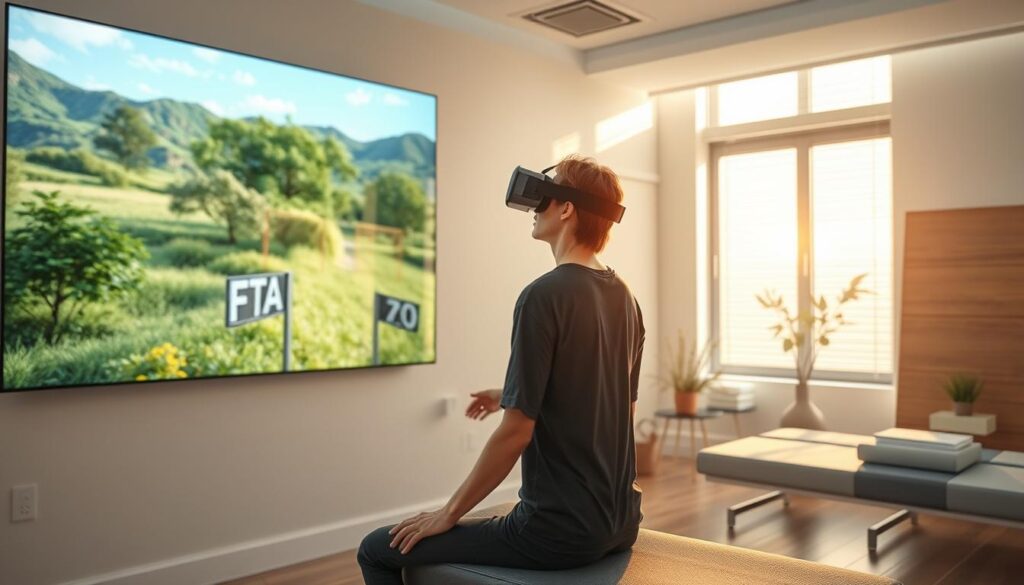
VR technology creates simulated worlds for patients to do exercises. They wear headsets and sensors track their movements. This way, therapists can make programs fit each patient’s needs.
This makes therapy more fun and helps patients stick to their plans.
The Evolution of VR Technology in Healthcare
VR technology in healthcare has grown a lot. Old models were not good enough for therapy. Now, we have advanced systems that make therapy more real and safe.
VR Games for Motivation and Engagement in Therapy
VR games in therapy are changing how we see patient care. They turn boring therapy sessions into fun adventures. This makes therapy feel like a game, making it more enjoyable.
VR games make patients want to get involved more. What used to be boring tasks now feel like exciting challenges. This makes patients more likely to stick with their therapy plans.
Healthcare providers are seeing great results with VR games. Patients love the game-like feel of therapy. It helps their mental health and speeds up their physical recovery. VR games are a big win for therapy, boosting motivation and helping patients get better faster.
Benefits of VR Games in Physical Therapy
Virtual reality (VR) games in physical therapy bring many benefits. They make patients more involved and help them recover better. VR games make therapy more fun and engaging than old methods.
Enhanced Patient Adherence
One big benefit of VR in therapy is it makes patients stick to their exercises. Old therapy can be boring and lose interest. But VR games turn therapy into a fun adventure that keeps patients involved.
A study showed VR therapy makes patients more committed to their exercises. This is a big win over traditional therapy.
Improved Outcomes for Various Conditions
VR helps patients with many health issues get better faster. It’s great for stroke recovery, orthopedic injuries, and balance problems. Patients get stronger and feel more accomplished in their recovery.
When patients are more engaged, they do better in therapy. This is why VR is a game-changer in physical therapy.
| Condition | Traditional Therapy Outcomes | VR-Assisted Therapy Outcomes |
|---|---|---|
| Stroke Recovery | Moderate improvements | Significant improvements |
| Orthopedic Injuries | Variable results | Consistent progress |
| Balance Disorders | Slow recovery | Rapid advancements |
Types of VR Games Used in Physical Therapy
Virtual reality has changed the game in physical therapy. It brings many VR games made just for therapy. These games help patients in different ways, making therapy fun and effective.
Games that focus on balance are very popular. They help patients stay steady and move well. These games can help prevent falls and improve how well patients can move.
VR games that build strength are also common. They make patients work out in a fun way. This can help patients get stronger and more motivated.
Games that help with motor skills are key in therapy. They help patients get better at small movements. Therapists can see how patients are doing and change the game to help more.
| Type of VR Game | Primary Focus | Example Applications |
|---|---|---|
| Balance-Focused Games | Improving stability and coordination | Balance Beam Challenges, Obstacle Navigation |
| Strength-Building Exercises | Enhancing muscle engagement | Virtual Weightlifting, Resistance Training |
| Motor-Control Activities | Regaining fine motor skills | Target Practice, Object Manipulation |
Therapists use different VR games to make therapy plans just for each patient. This mix of fun games and therapy goals helps patients recover well.
Creating Immersive Experiences
Immersive VR experiences are key in making physical therapy better. They create environments that feel like real life. This lets patients practice skills needed for everyday tasks while keeping their therapy goals in mind.
By simulating real-life settings and challenges, patients build confidence. They also stay motivated during their therapy sessions.
Virtual Worlds That Mimic Real-Life Scenarios
Virtual worlds have gotten much better, allowing patients to face challenges that feel real. These experiences let users practice important tasks like walking or balancing safely. It makes learning skills easier to remember.
Encouraging Active Participation
VR therapy is great because it makes patients actively participate. Unlike old methods that just have them watch, VR gets them involved. This makes learning fun and more effective.
Real-Time Feedback and Progress Tracking
Adding real-time feedback to physical therapy boosts patient motivation a lot. Advanced VR systems help therapists give instant feedback during exercises. This makes patients feel they’re achieving something, keeping them interested and active.
How Instant Feedback Motivates Patients
Instant feedback is a great motivator for patients. It lets them know right away how they’re doing. This quick feedback helps them improve their techniques fast.
It also makes them want to do more. The mix of visual and sound cues helps them move right and feel confident.
Tracking Improvements Over Time
Tracking progress is key to keeping patients motivated. Seeing how they’ve improved, like in speed or accuracy, is very motivating. It shows them their hard work is paying off.
This makes them more eager to keep going. Seeing their progress boosts their motivation, showing them they’re on the right track.
Safety and Controlled Environments
In physical therapy, making a safe space is key for patient involvement. Virtual reality (VR) technology creates safe areas. Here, patients can do tough movements without fear of injury.
This safety is vital for building confidence. It’s especially important for those recovering from injuries or dealing with balance issues.
Reducing Fear of Falling
The fear of falling can slow down recovery. Patients might shy away from needed exercises if they’re worried about falling. VR offers a safe place to practice real-life scenarios without risks.
As patients get used to VR, they feel more confident. The help from therapists and the immersive VR experience reduce the fear of injury. This helps improve physical skills and makes therapy more positive.
Increased Access to Physical Therapy
Telehealth and VR technology are key in making therapy more accessible. They help therapists offer personalized sessions to those who can’t get to in-person therapy. This is especially helpful for people in remote or underserved areas.
Telehealth Integration with VR
Telehealth and VR together make therapy sessions engaging and easy for patients. They can do therapy from home, which is great for those with mobility issues or no local facilities. This way, therapy is not limited by where you live.
How VR Breaks Down Geographical Barriers
VR technology lets healthcare reach more people. It helps those who can’t get to therapy because of mobility issues or lack of facilities. With telehealth and VR, therapy is available to everyone, improving health outcomes.
Promoting Neuroplasticity Through VR Rehabilitation
VR rehabilitation is a promising way to boost neuroplasticity. It helps those recovering from strokes or traumatic brain injuries (TBI). VR uses immersive environments and tasks to help the brain adapt and change. This is key for recovery after brain challenges.
The Science of Brain Adaptation
Neuroplasticity lets the brain change and form new connections. This is especially useful during rehab. VR offers patients specific and repetitive exercises, which help the brain adapt.
The virtual worlds in VR keep patients engaged. This boosts their motivation and effort in rehab.
Specific Benefits for Stroke and TBI Patients
VR rehabilitation can greatly help stroke survivors and TBI patients. It improves motor skills and cognitive abilities. It also helps with emotional resilience.
- Task-specific training that simulates real-life scenarios, enabling contextual practice.
- Increased patient motivation due to the engaging nature of virtual environments.
- Real-time feedback that allows for immediate adjustment and improvement.
- Social interaction through multiplayer VR experiences, which can alleviate feelings of isolation.
These benefits make rehab more effective. They lead to better outcomes and a higher quality of life for those with neurological issues.
Case Studies and Clinical Evidence
Many case studies in rehabilitation show VR’s success in real-world settings. A key study found VR helped those with traumatic brain injuries. It made their motor skills better and boosted their thinking abilities.
Stroke patients also saw big gains with VR. They played games made just for them. This improved their arm strength and made them happier with their therapy.
VR is also good for people with chronic pain. They felt less pain while using VR. This shows VR can help in many ways, making recovery faster and better.
Healthcare experts are excited about VR’s role in therapy. It helps patients get better physically and mentally. VR is a big step forward in helping people recover.
Challenges and Limitations of VR in Therapy
Virtual reality in therapy has great potential, but it faces several challenges. These issues need to be solved to fully benefit from VR technology. This is important for both patients and healthcare professionals.
Cost and Accessibility Issues
VR systems are expensive, making them hard for many clinics to afford. The cost includes the hardware, software, maintenance, and support. This can be a big burden for smaller practices.
Because of this, not everyone can get the treatment they need. This problem is worse in rural or underserved areas. There, resources are scarce, making access to VR therapy even harder.
Need for Specialized Training for Therapists
Using VR in therapy requires special skills and knowledge. Therapists need to be well-trained to use VR effectively. Without proper training, treatments may not work well.
They might not fully engage patients. To achieve good results, therapists must keep learning about VR. This ensures they can use VR to its fullest potential.
Future Trends in VR and Physical Therapy
VR in therapy is set to grow as tech advances. It will lead to better treatment methods. VR offers immersive experiences that can greatly help patients. This section looks at how VR tech will change physical therapy.
Advancements in VR Technology
New VR systems are becoming easier to use. They have better graphics, tracking, and feel. These changes make therapy more real and personal, leading to better results.
Potential for Broader Applications
VR is not just for physical therapy anymore. It’s also being used in mental health, pain management, and occupational therapy. This growth will bring new tools for therapists to tackle tough challenges. The work of VR creators and healthcare experts will lead to a more complete medical approach.
| Technology | Current Application | Future Possibilities |
|---|---|---|
| Motion Tracking | Real-time feedback in physical therapy | Integration in mental wellness and pain management |
| Enhanced Graphics | Immersive environments for rehabilitation | Creation of complex scenarios for various therapeutic needs |
| Haptic Feedback | Physical sensations during VR experiences | Realistic simulations in occupational therapy |
Patient Testimonials and Success Stories
Patient success stories show how virtual reality (VR) changes rehabilitation. They tell of deep changes in people’s lives during physical therapy. Many say VR games made them more motivated and engaged.
A patient recovering from knee surgery used a VR game to improve mobility. This game made them move and think in a new way. It helped them heal faster. More people started using VR therapy because of these stories.
These stories give us a peek into today’s innovative therapies. As more people share their experiences, we see how VR changes physical therapy. Each story shows the value of treatments that are fun and tailored to each person.
| Patient Experience | Challenge Faced | Outcome Achieved |
|---|---|---|
| Knee Surgery Recovery | Limited mobility and pain | Increased range of motion and reduced pain |
| Stroke Rehabilitation | Difficulty with coordination | Improved coordination and confidence |
| Spinal Injury Recovery | Mental block towards movement | Enhanced motivation leading to progress |
Conclusion
Virtual reality (VR) games in physical therapy have shown great benefits. They make therapy sessions more fun and engaging. This approach turns boring rehab into exciting experiences that encourage patients to get involved.
VR lets therapists track progress easily and create realistic scenarios. This has changed how therapy is done, leading to better results.
This shows VR’s many advantages for both patients and therapists. It helps patients stick to their treatment plans and feel happier. More research and investment in VR are needed to see its full benefits.
As VR grows, so will the field of physical therapy. This means better recovery experiences and outcomes for everyone.
Using VR in therapy is a big step towards making rehab better. It’s important to adopt these new methods. This will make recovery more enjoyable and effective for patients with different conditions.
FAQ
What are the main advantages of using VR in physical therapy?
VR in physical therapy boosts patient motivation and treatment plan adherence. It leads to better outcomes for many conditions. Plus, it makes therapy fun and interactive.
How does VR technology enhance patient engagement?
VR creates immersive environments for patients to engage in their therapy. It turns exercises into fun adventures. This makes therapy feel less like a chore.
Can VR rehabilitation be customized to meet individual patient needs?
Yes, VR systems can be tailored for each patient. Therapists adjust the VR experiences to meet specific needs. This includes targeting balance or strength issues.
What types of VR games are used in physical therapy?
VR games in physical therapy include balance games, strength exercises, and motor-control activities. These games meet various recovery needs. They help therapists create personalized therapy plans.
How does VR promote neuroplasticity in patients recovering from neurological injuries?
VR promotes neuroplasticity through immersive, repetitive exercises. These exercises help the brain adapt after injuries like strokes or TBIs. This leads to significant functional improvements.
What challenges do healthcare providers face in implementing VR in therapy?
Healthcare providers face high costs, accessibility issues, and training needs for VR. Overcoming these barriers is key to fully benefiting from VR in therapy.
How does VR technology facilitate remote therapy sessions?
VR technology makes remote therapy possible. It allows patients in rural areas or with mobility issues to get therapy at home. This breaks geographical barriers and improves health outcomes.