Anúncios
Can virtual reality games change how post-intubated patients recover? The healthcare world is looking for new ways to help patients get better. VR respiratory therapy is becoming a key player in this search. It uses games to keep patients engaged and also tracks their progress from afar.
This method tackles the mental and physical challenges of recovery. It might just transform how we think about helping patients after they’ve been intubated. VR could be the game-changer we need in healthcare.
Anúncios
The Need for Innovative Therapies in Post-Intubated Patients
Recovering from intubation is tough for patients, needing special care in critical care. Old rehab methods don’t meet their complex needs. They often lead to breathing and heart problems because patients don’t move much.
New therapies in rehab can really help. They work on both the body and mind, making healing more complete. Virtual reality, for example, can make recovery fun and engaging.
Healthcare workers are looking into new ways to help post-intubated patients. These new methods aim to get patients moving more. This could lead to better health outcomes for them.
Anúncios
| Challenge | Traditional Therapy | Innovative Therapy |
|---|---|---|
| Physical Activity Levels | Low activity leading to complications | Increased engagement through technology |
| Psychological Support | Limited focus on emotional wellbeing | Enhanced motivation and coping strategies |
| Recovery Outcomes | Variable, often prolonged | Improved, with potential for faster recovery |
Understanding the Role of Remote Monitoring in Recovery
Remote monitoring makes recovery better for patients after they’ve been intubated and use virtual reality therapy. It uses advanced tools like wearable devices and telemetry systems. These tools track health metrics from a distance.
Healthcare teams can see vital signs in real-time. This lets them act fast if something looks off. It helps keep patients safe and shows how well therapy is working.
Telehealth apps give medical teams quick access to data. This means they can make changes fast if needed. It helps tailor care to each patient, making recovery better.
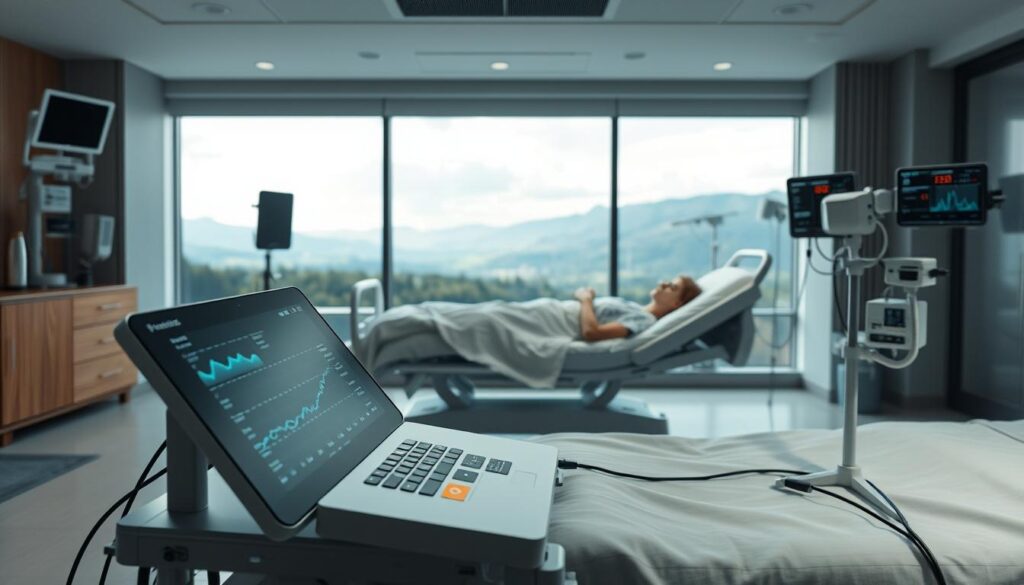
Adding remote monitoring to therapy programs helps patients get support without being in the hospital. This makes recovery faster and can lead to better results.
What is VR Respiratory Therapy After Intubation with Monitoring?
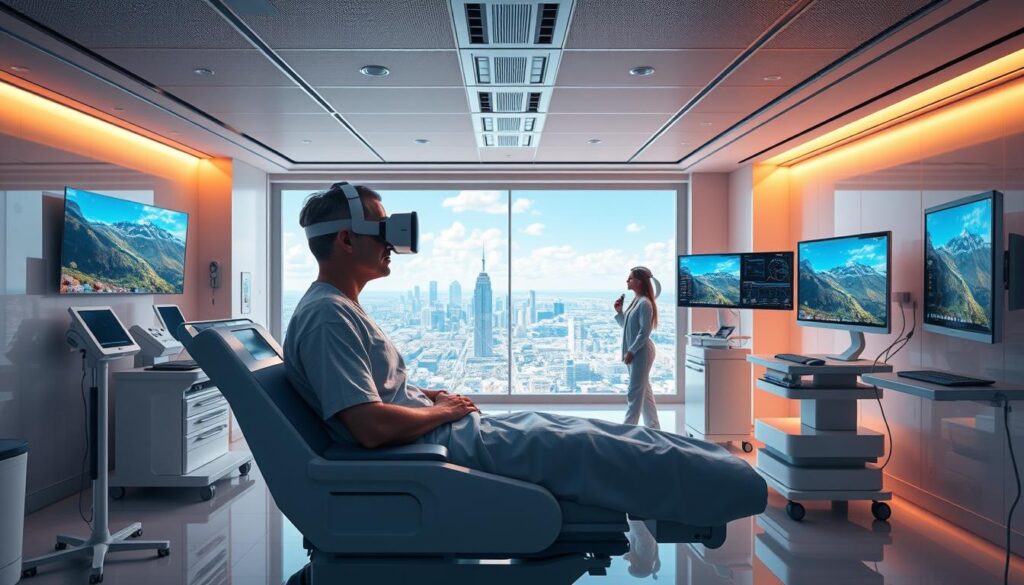
VR respiratory therapy is a new way to help patients recover from intubation. It uses virtual reality to make therapy fun and engaging. This approach helps patients stay motivated and involved in their recovery.
Defining Virtual Reality Therapy
Virtual reality therapy creates interactive experiences to help patients recover. These experiences make therapy feel less scary. Patients are more likely to participate, leading to better health outcomes.
Mechanics of Remote Monitoring During Therapy
A remote monitoring system is key in VR therapy. It uses tools like accelerometers to track patient activity and health. This lets doctors adjust therapy on the fly to meet each patient’s needs.
Benefits of Using Virtual Reality Games in Rehabilitation
Virtual reality games bring many benefits to rehabilitation. They make therapy more fun and help with emotional health. This makes the therapy experience better for patients.
Enhancing Patient Engagement
Virtual reality games grab patients’ attention, making therapy more fun and engaging. They create an immersive experience that encourages active participation. Patients find exercises enjoyable, not just a chore.
This leads to a positive therapy environment. It helps patients achieve better health outcomes.
Reducing Anxiety and Stress Levels
Virtual reality is great for reducing anxiety in patients. It offers a break from the stressful hospital environment. Patients feel less stressed and more relaxed.
Many patients appreciate this new approach. They see it as a way to make recovery easier and less scary.
How VR Games Improve Physical Activity in Patients
Virtual reality exercise is a new way to help patients recover from serious health issues. VR games make moving fun and interactive. Patients get to explore digital worlds, moving, jumping, and stretching.
This activity is light to moderate, which is key for getting better. Research shows VR sessions boost activity levels. This helps prevent muscle loss and keeps patients healthy.
VR games are not just for fun. They also help patients stick to their rehab plans. As patients get more active, doctors can see how they’re doing. This lets doctors change the therapy to fit each patient’s needs.
Safety and Feasibility of VR in Clinical Settings
Virtual reality (VR) is being explored in clinical settings for its benefits. Studies show VR is safe, with no adverse events reported. This makes VR a good option for rehabbing critically ill patients.
VR systems fit well with current healthcare setups. Setting them up is easy, with little technical hassle. This makes it simple for hospitals to start using VR. Also, there are monitoring systems to quickly respond to any patient changes during VR use.
VR therapy improves patient care and opens up new research areas. It’s a promising tool for future use in respiratory therapy.
Evaluating Patient Acceptance and Satisfaction
VR therapy is gaining attention in rehab. Studies show patients like it, saying it helps them recover better. VR therapy is more engaging than old methods.
Patient Feedback on VR Therapy Experience
Many patients enjoy VR therapy. They find it engaging and fun. This makes rehab more enjoyable for them.
They also feel more motivated and happy during sessions. This shows VR can really help patients feel better.
Comparative Satisfaction with Traditional Therapies
Comparing VR therapy to old methods shows VR wins. Patients say VR is more fun and interactive. This makes them happier with their treatment.
Challenges and Considerations in Implementation
Using virtual reality therapy in respiratory care has many implementation challenges. These hurdles can make it hard for this new method to be widely accepted. Technical problems like hardware failures, software issues, and slow internet can stop therapy.
Teaching staff to use VR therapy well is crucial. If they’re not trained right, therapy won’t work as it should. They need to know how to use the tech and keep therapy smooth for patients.
There are also ethical worries when using VR with sick patients. We must plan carefully to make sure these patients get the benefits without harm. Solving these challenges is key to making VR therapy work.
| Challenge | Description | Impact on Therapy |
|---|---|---|
| Technical Difficulties | Hardware or software issues that disrupt the therapy process | Delays in treatment and reduced effectiveness |
| Staff Training | Inadequate training on how to implement VR therapy | Inconsistent application, affecting patient outcomes |
| Ethical Considerations | Concerns regarding the use of VR in vulnerable populations | Potential risks to patient safety and comfort |
Case Studies and Evidence Supporting VR Therapy
Many case studies show how virtual reality therapy helps post-intubated patients. These studies show big improvements in physical activity and emotional health. For example, patients in VR therapy sessions moved better and felt less anxious, leading to better recovery.
The proof for VR therapy is strong, with many trials showing good results. People in VR sessions were more eager to do their rehab. The immersive nature of VR makes rehab more fun and engaging, which is key for healing.
Future Directions of VR in Respiratory Therapy
The future of VR in respiratory therapy looks bright. Researchers are working hard to make it even better. They aim to make the game more engaging and tailored to each patient’s needs.
New technologies like AI and machine learning might soon be part of VR. This could make remote monitoring even more effective. It could also help adjust treatments in real-time, making them more personalized.
With these advancements, the possibilities for better care are endless. It’s crucial for healthcare providers, software developers, and researchers to work together. Their efforts will help make a big difference in how we treat respiratory issues.
Conclusion
VR respiratory therapy after intubation, with remote monitoring, is a big change in how patients recover. It helps patients move more and get involved in their healing. It also lowers stress and anxiety in sick patients, making it a key part of recovery.
Looking ahead, technology will make VR therapy even better. It could change how we do respiratory therapy, making healthcare better. This is a big step forward in healthcare, offering hope for better recovery for those who have been intubated.
FAQ
What is the role of virtual reality in respiratory therapy for post-intubated patients?
Virtual reality (VR) is a new way to help patients recover after being intubated. It offers immersive experiences that help patients overcome physical and mental barriers during their rehabilitation.
How does remote monitoring enhance the effectiveness of VR therapy?
Remote monitoring uses devices to track patients’ health during VR therapy. This lets doctors keep an eye on patients and make changes as needed. It also helps create treatment plans that fit each patient’s progress.
What benefits do VR games offer in the rehabilitation of critically ill patients?
VR games make therapy fun and interactive. They help patients stay motivated and involved in their treatment. This can also reduce anxiety and distract from pain and stress.
Are there any safety concerns associated with using VR in clinical settings?
Studies show VR therapy is safe for sick patients. There are no reported bad effects. Safety checks are in place to quickly address any health changes, and VR fits well into current healthcare settings.
What challenges exist when implementing VR therapy in hospitals?
Hospitals might face technical issues and need to train staff. They also have to fit VR into their current routines. There are ethical questions about using VR with vulnerable patients, which need careful thought.
How successful have case studies been regarding VR therapy for post-intubated patients?
Many case studies show VR therapy works well. Patients have shown better physical and emotional health after using VR. This supports the use of immersive therapy.
What advancements can we expect for VR in respiratory therapy in the future?
We might see better VR games and scripts for different patients. AI and machine learning could improve remote monitoring. This could lead to more personalized and effective therapy.