Anúncios
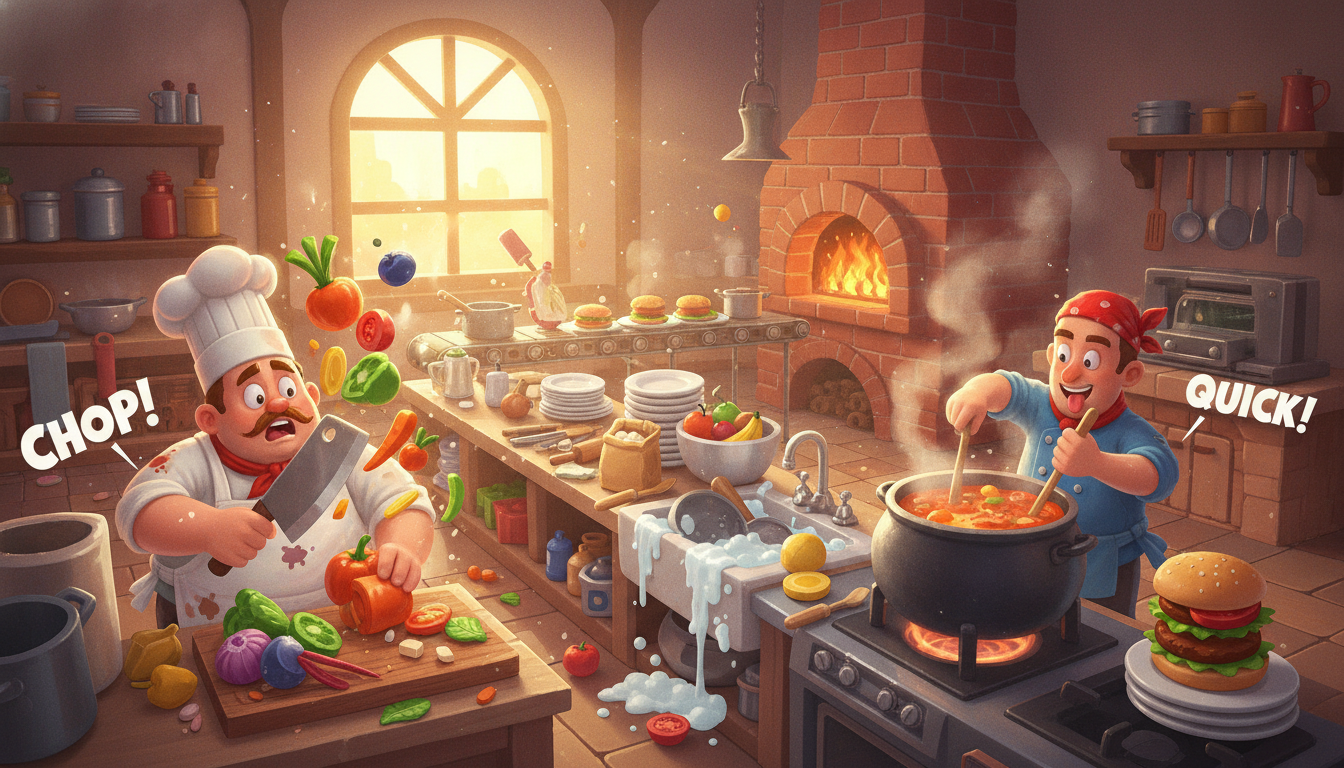
The pressure of serving hungry customers while keeping the kitchen organized might seem like an impossible challenge, but that’s exactly what makes it so much fun.
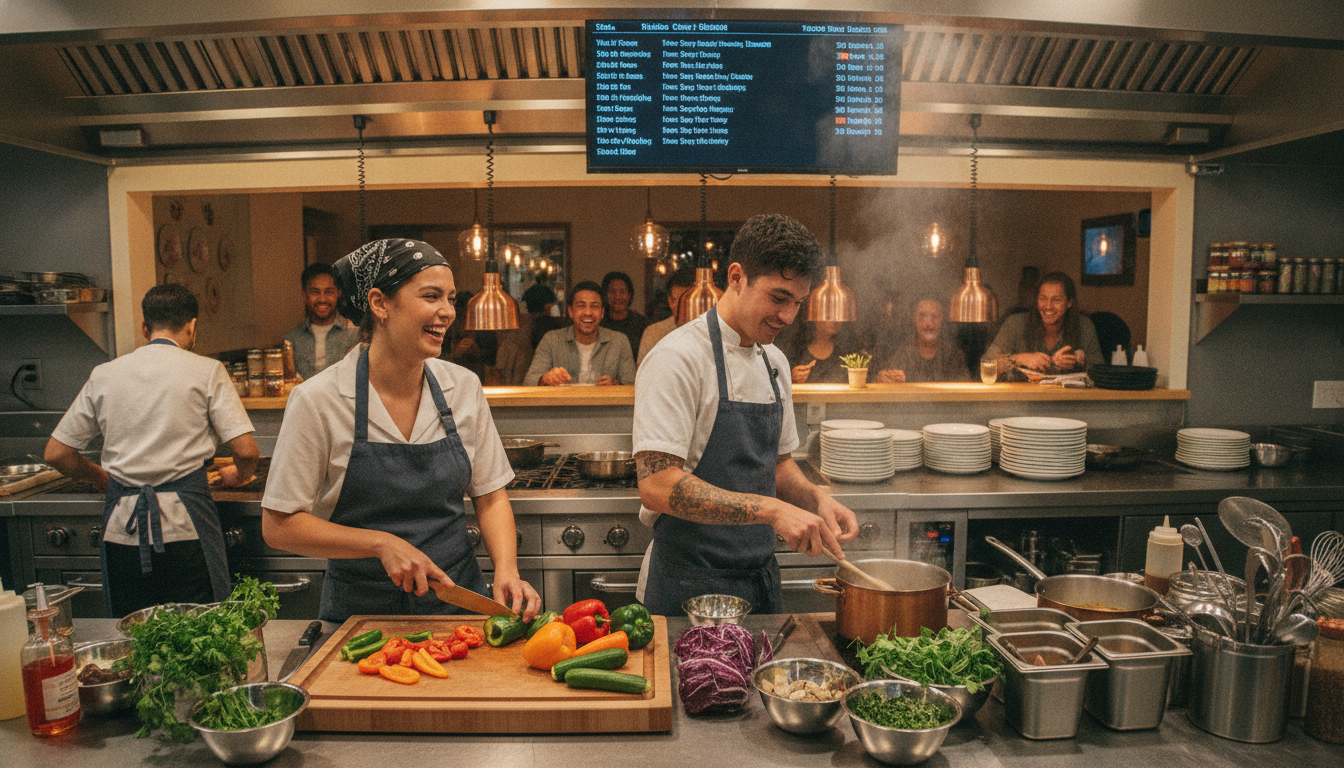
PlateUp combines the intensity of a real-world restaurant with strategic elements that require total team coordination, turning every match into a unique experience where communication is the most important tool for avoiding total chaos.
Anúncios
Today, we’ll discover how to master the art of serving with efficiency—and plenty of fun.
Taking your first steps on your culinary journey
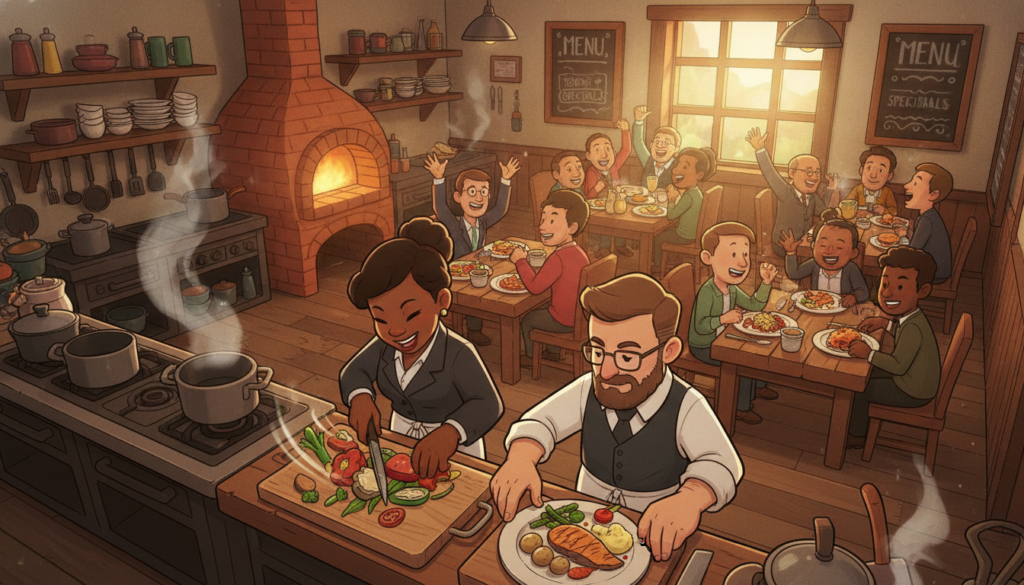
The culinary journey you are about to embark on requires careful planning before opening your doors. Entering the world of culinary simulation is an exciting experience, but it demands immediate organization to avoid chaos during service.
When starting out in PlateUp, every early decision directly impacts your business’s efficiency. Staying focused on the fundamentals ensures you can serve your customers with both speed and quality.
Anúncios
Choosing your first restaurant
Selecting a location is the starting point for any successful entrepreneur. You need to analyze the available space, as each layout presents unique challenges that can either facilitate or hinder your team’s movement.
Consider the following factors when selecting your restaurant:
- The layout of the tables in relation to the kitchen.
- The available space for installing new equipment.
- The distance waiters must cover to deliver dishes.
Understanding the basic service flow
The workflow in a cooking simulation follows a precise logic that you need to master quickly. It all begins with greeting customers, who expect to be seated at a clean table that is ready for use.
After seating the customers, the process follows key steps:
- Take the order, paying attention to preferences.
- Prepare the ingredients in the kitchen according to the recipe.
- Serve the finished dish before the customer runs out of patience.
Mastering this basic cycle in PlateUp is the key to keeping your restaurant running smoothly without major setbacks. With practice, these tasks become second nature, allowing you to focus on more complex improvements.
Mastering automation mechanics
Transforming your kitchen into an efficient assembly line is the next logical step for any chef looking to scale their business.
Kitchen automation is the game-changer that reduces manual workload, enabling you to focus on strategy while the system does the heavy lifting.
How conveyor belts and robotic arms work
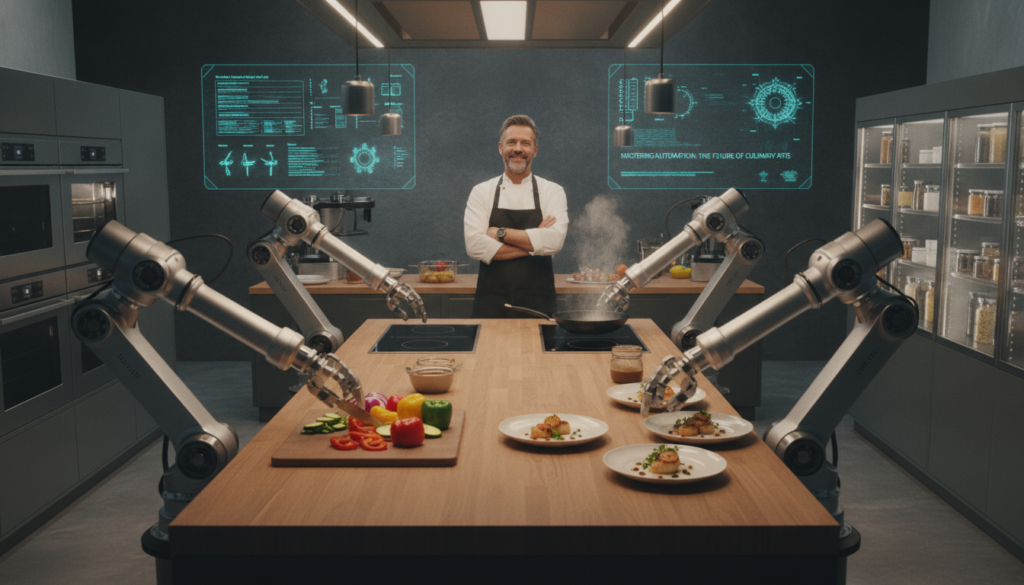
Conveyor belts are essential for moving ingredients and finished dishes between workstations without you having to move around; they connect stoves, countertops, and serving areas, creating a continuous production flow.
Robotic arms, meanwhile, act as tireless assistants. They can pick items off a conveyor belt and place them directly onto a stove or plate, eliminating the need for constant human interaction in repetitive tasks.
Optimizing the layout for maximum efficiency
A sound layout strategy requires making intelligent use of every inch of your space. The goal is to minimize the distance items travel, ensuring ingredients reach their final destination in the shortest possible time.
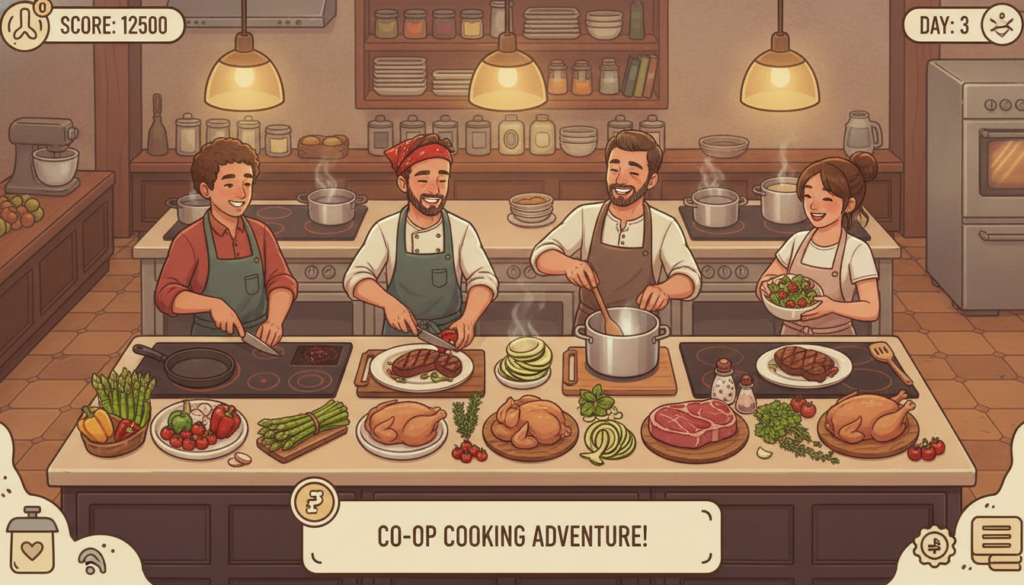
When planning your space, consider the following points:
- Position the stoves near the output conveyors.
- Keep storage areas close to the preparation zones.
- Create clear pathways so that items do not get stuck in dead corners.
Tips for avoiding kitchen bottlenecks
Even with advanced equipment, planning errors can bring your service to a halt. The key layout strategy is to prevent dishes from piling up at transition points—something that happens when preparation speed outpaces delivery capacity.
To maintain smooth operations, constantly monitor where items tend to get stuck.
If you notice a backup, adjust the positioning of your robotic conveyors or add more arms to speed up movement, ensuring your kitchen automation system always runs in harmony.
The importance of dish selection
In the world of culinary simulation, every dish added to the menu brings new challenges. How you structure your menu dictates the workflow and the pressure your team will face during service.
How the menu influences the day’s difficulty
Every item you select drastically alters preparation complexity. Elaborate dishes require more steps, which increases customer wait times and can lead to lines forming at the door.
This roguelite mechanic ensures that no two rounds are alike. You must stay alert, as an overly extensive menu can overwhelm even the most experienced cooks.
Balancing simple and complex dishes
To maintain business profitability, finding a healthy balance is essential. Mixing quick options with more complex dishes helps sustain cash flow without sacrificing service quality.
The secret lies in choosing a menu that doesn’t require constant attention at every station simultaneously. With careful planning, you ensure your team can serve all customers efficiently and calmly.
Managing stress and customer wait times
Time is your greatest enemy in the kitchen, and every second counts when it comes to keeping customers happy. In an environment where demand rises rapidly, time management becomes the most valuable skill for any chef.
If service lags, customer patience wears thin—which could end your shift sooner than expected.
Managing customer patience
Every customer has a patience meter that depletes as wait times increase. When the meter runs out, the customer leaves, hurting both your score and your daily profits.
To avoid this, prioritize the orders that have been in the queue the longest.
Keep a constant eye on the visual indicators at the tables. If you notice a customer getting impatient, try to expedite their dish or speed up service.
Effective time management allows you to identify bottlenecks before they turn into serious problems.
Strategies for keeping the dining area organized
A disorganized dining area is a recipe for chaos and stress. Keeping pathways between the kitchen and the tables clear ensures your staff can move around without bumping into one another. Additionally, the furniture layout should allow for quick access to finished dishes.
To maintain a smooth, efficient service flow, consider these essential practices:
- Clear tables immediately after customers leave to free up space.
- Position high-demand items near the serving area.
- Avoid piling up dirty dishes on the work counters.
- Create clear paths so players do not block each other.
- Prioritize layout organization to optimize time management during the rush.
Conclusion
PlateUp delivers a deep management experience that rewards strategic planning and constant collaboration. Each match demands total focus to transform a small restaurant into a wildly successful culinary empire.
Mastering automation mechanics allows your team to stay organized, even on the most chaotic days. The key lies in the ability to adapt the layout as customer demand grows.
So, enjoy every moment of this challenging and fun culinary journey with your friends. Continuous learning ensures that every round is an opportunity to hone your skills as both a chef and a manager.