
Anúncios
Imagine a future where physical therapy for spinal cord injuries uses virtual worlds instead of traditional methods. Virtual reality (VR) technology is changing how healthcare treats patients. It’s making physical therapy better, improving patient results, and enhancing life quality for those with spinal cord injuries.
Introduction to Virtual Reality in Rehabilitation
Virtual Reality (VR) has changed the way we do rehabilitation. It makes therapy more fun and effective. The introduction to VR in this field is a big step forward. It moves from old therapy methods to new, interactive ones.
Anúncios
VR lets patients practice moving and doing tasks in a safe space. This is a big deal for those in rehab.
Therapeutic VR applications are really good at keeping patients interested. This interest helps them stick to their treatment plans. It makes them want to reach their goals.
With VR, recovery doesn’t seem so hard. It gives patients the confidence to keep going.
Anúncios
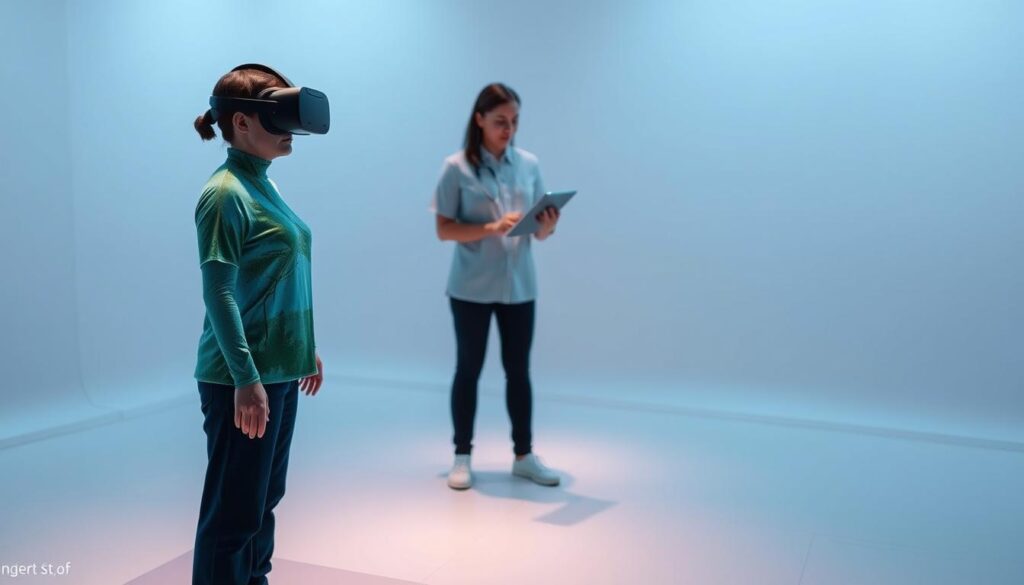
VR technology has improved a lot. This has helped us see its value in medicine, especially in rehab. More doctors are using VR now. It’s becoming a key part of patient care and recovery.
Understanding Spinal Cord Injuries and Their Impact
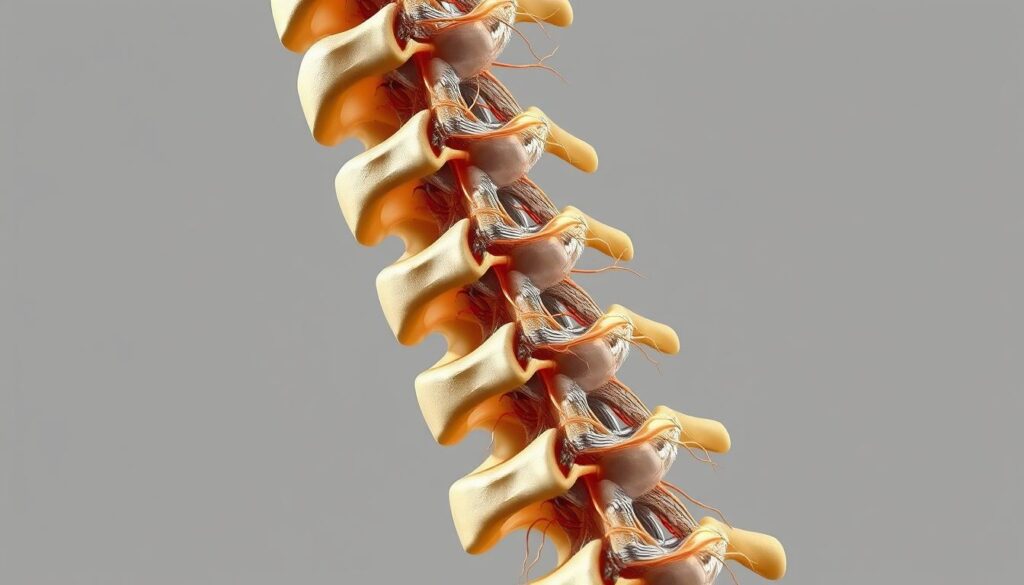
Spinal cord injuries (SCI) are a big medical issue. They cause many problems that change a person’s life a lot. These issues include losing feeling, having trouble moving, and not being able to control some body parts.
Every year, about 17,000 new cases happen in the United States. This shows how common SCI is.
The effects of SCI are not just physical. They also affect a person’s feelings and mind. Many people lose some independence and have to make big changes in their daily lives. These changes can make someone feel worse about themselves and affect their mental health.
Improving the quality of life for SCI patients is key. Therapy should help them move better and be more independent. It should also help with the emotional and mental challenges of recovery. This way, patients can feel better and take back control of their lives.
What is Virtual Reality (VR)?
Virtual reality uses technology to create fake worlds that feel real. It offers a wide range of experiences, from simple 2D to complex immersive VR. Users can feel like they’re really there, something regular media can’t do.
VR systems fall into three main types: non-immersive, semi-immersive, and fully immersive. Non-immersive systems use basic screens for limited interaction. Semi-immersive systems use projectors or displays for a better experience but still keep you connected to the real world.
Then there are fully immersive systems, often with head-mounted displays (HMDs). These systems let users explore 3D worlds and interact through movement. Knowing these types helps us see how VR can be used in many ways, like helping people with spinal cord injuries.
As VR technology gets better, it can offer more for rehabilitation. This leads to better results for patients.
The Role of VR in Physical Therapy
Virtual reality (VR) makes physical therapy more effective. It offers immersive experiences that help in rehabilitation. Therapists can create personalized environments for patients, making recovery better.
Patients do exercises in settings that feel like their daily lives. This helps them apply what they learn in therapy to real situations.
VR therapy has many benefits. It lets therapists adjust therapy plans as needed. They can see how patients respond to exercises and make changes.
This approach keeps patients motivated. They know their progress is being tracked and supported.
VR also helps people face their fears in a safe way. It reduces anxiety during physical therapy. This makes it easier for patients to focus on their goals.
Through VR, patients improve their motor skills. They also help their brains adapt, which is key for overcoming spinal cord injuries.
Current Applications of VR in Therapy
Virtual reality is making a big impact in therapy, especially for those with spinal cord injuries. It’s a flexible tool that helps in many ways. For example, it’s great for balance training, helping patients get used to real-life situations in a safe space.
VR also helps with motor rehabilitation, making exercises fit each person’s needs. It turns boring tasks into fun games, making patients more eager to follow their treatment plans. Studies show VR can improve mobility and even help with social issues that come up during recovery.
VR is also used to manage pain. It distracts patients from discomfort during exercises. This new method makes therapy more engaging and encourages patients to be more active in their recovery.
| Application | Description | Benefits |
|---|---|---|
| Balance Training | Using VR to simulate real-world environments for training stability and coordination. | Enhanced safety and ability to practice movements without real-life risks. |
| Motor Rehabilitation | Tailored VR exercises that improve strength and movement. | Increased motivation through engaging gameplay elements. |
| Pain Management | Distraction techniques using VR during exercises. | Reduction in perceived pain and discomfort during rehabilitation. |
VR rehab in spinal cord injury patients
VR rehabilitation has made big steps in helping spinal cord injury (SCI) patients recover. It improves mobility and makes therapy fun and engaging. This way, patients can take an active role in their recovery.
Improving Mobility and Functionality
VR-based therapies have shown great benefits in improving mobility. Patients do activities that mimic real-life situations, helping them practice movements. The Berg Balance Scale and Timed Up and Go (TUG) test show big improvements in balance and walking.
Enhancing Patient Engagement and Motivation
Keeping patients engaged in therapy is key to successful recovery. VR makes therapy interactive, using game-like elements to keep patients motivated. This immersive experience makes therapy sessions more enjoyable and keeps patients focused on their recovery.
| Assessment Tool | Pre-VR Rehab Score | Post-VR Rehab Score | Improvement (%) |
|---|---|---|---|
| Berg Balance Scale | 32 | 42 | 31.25% |
| TUG Test (seconds) | 16 | 12 | -25% |
Types of Virtual Reality Systems Used in Therapy
Virtual reality systems in therapy vary by immersion level. Each type has special features and benefits for different needs. Clinicians can pick the best one for patient therapy.
Non-Immersive Systems
Non-immersive VR uses regular screens and devices for simple interactions. It’s easy to access and doesn’t cost much. Patients use a keyboard or mouse to interact, making it great for starting therapy.
Semi-Immersive Systems
Semi-immersive VR has bigger screens for a better experience. It uses projections or screens to create depth. This makes therapy more fun and interactive, while still letting users control the experience.
Fully Immersive Systems
Fully immersive VR is the top tech with head-mounted displays and feedback devices. It offers real and interactive worlds. Patients feel fully involved, helping them learn and recover better for therapy goals.
| Type of VR System | Level of Immersion | Common Uses | Advantages |
|---|---|---|---|
| Non-Immersive VR | Low | Basic exercises, education | Cost-effective, accessible |
| Semi-Immersive VR | Medium | Engaging activities, skill building | More dynamic interaction |
| Fully Immersive VR | High | Advanced training, therapy sessions | Deep engagement, realistic environments |
Benefits of VR Therapy for Spinal Cord Injury Patients
Virtual reality (VR) therapy brings many benefits to spinal cord injury patients. It boosts patient motivation and gives timely feedback. This makes the rehabilitation process more engaging and effective.
Motivation and Adherence to Treatment
VR therapy is great at keeping patients motivated. Traditional therapy can be dull, leading to less participation. But VR turns exercises into fun games or experiences.
This makes patients more eager to follow their treatment plans. It helps them heal faster.
Immediate Feedback During Exercises
VR systems with motion sensors give instant feedback. This is key for learning. Patients learn quickly as they see how their movements affect the game.
This feedback loop helps patients understand their abilities better. It also makes them feel accomplished. So, spinal cord injury patients can reach their rehabilitation goals more easily.
Techniques and Protocols for Effective VR Rehab
Effective virtual reality rehabilitation uses many techniques and protocols. These are designed to improve patient outcomes. They help make treatment more engaging and tailored to each person, which is key to successful rehabilitation.
Incorporation of Gamification
Gamification in therapy boosts patient motivation. It turns boring exercises into fun games. This makes patients enjoy therapy more and stay motivated.
Customizable Therapy Programs
Personalized VR rehab programs meet each person’s unique needs. They let healthcare providers create exercises that fit specific impairments and goals. This personal touch keeps patients motivated and increases the chance of success in therapy.
Challenges and Limitations of VR in Rehabilitation
VR in rehabilitation is exciting but comes with challenges. The high cost of advanced equipment is a big barrier. Many healthcare providers can’t afford it. This limits VR therapy in areas that need it most.
Healthcare professionals need a lot of training to use VR systems well. They must learn how to make VR therapy effective. Not everyone reacts well to VR, which adds to the challenge. Some patients might get motion sickness, making it hard to keep them involved.
Recent Research Findings on VR Therapy
Recent studies on VR therapy have shown its potential in physical rehabilitation. This is especially true for those recovering from spinal cord injuries. The research shows VR can improve mobility and function, making traditional therapy more effective.
Studies on Mobility and Functionality
Studies have found that VR therapy boosts patients’ physical abilities. Patients who use virtual environments see better results in tests like the Functional Independence Measure. These results suggest VR therapy can be a key part of a patient’s recovery plan.
Impact on Neuropathic Pain Management
VR therapy also shows promise in managing neuropathic pain. It helps distract patients from their pain, giving them more control over their recovery. This approach can also help with cognitive rehabilitation, addressing both physical and mental aspects of recovery.
Future Directions for VR in Physical Therapy
The future of VR in therapy looks very promising. We expect big changes in how we use VR for rehabilitation. These changes will make therapy more effective and tailored to each patient’s needs.
VR rehabilitation is set to become even more interactive and adaptable. This means therapy can change in real-time to meet each patient’s unique needs. It will make therapy more engaging and successful.
Researchers will focus on how VR affects patients in the long run. They aim to create standard practices for using VR in therapy. This will help prove that VR really works.
Healthcare experts and tech developers will work together more. Their collaboration will help make VR a regular part of physical therapy. This will bring new, effective ways to help patients recover.
Integrating VR with Traditional Therapies
VR and traditional therapies are changing how we help patients get better. This new way mixes virtual reality with old-school physical therapy. It makes a plan that fits each person’s needs.
VR makes therapy more fun and hands-on. It lets patients learn in different ways. This makes recovery more interesting and effective.
VR helps therapists give feedback right away. Patients practice in fake worlds that feel real. This boosts their skills and keeps them motivated.
Teaching therapists about VR is key. They need to know how to use it well. This helps patients get better faster and in new ways.
| Traditional Therapy Techniques | VR Therapy Techniques |
|---|---|
| Hands-on physical exercises | Immersive virtual environments |
| Manual therapy | Interactive rehabilitation games |
| Patient education sessions | Simulated real-world scenarios |
| Progress tracking through assessments | Data analytics and feedback in real-time |
Conclusion
Virtual reality (VR) is changing how we treat spinal cord injuries. It makes therapy more fun and interactive. This helps patients get involved in their recovery.
VR does more than just keep patients motivated. It gives them instant feedback. This is key for improving motor skills and recovery.
Research is showing VR’s potential in therapy. It could make traditional methods better. Healthcare workers need to keep up with new tech to help patients more.
The future of rehab looks bright with VR. It could make care better and change how we treat spinal cord injuries. This means patients could get the best treatment possible.
FAQ
How does Virtual Reality (VR) enhance physical therapy for spinal cord injury patients?
VR makes physical therapy more engaging. It lets patients practice moving in real-like settings. This boosts their motivation and helps them stick to their rehab plans, leading to better recovery.
What are the different types of VR systems available for therapy?
There are several VR systems for therapy. Non-immersive systems use regular screens. Semi-immersive systems have bigger displays for better interaction. Fully immersive systems use head-mounted displays and feedback devices for a deeper experience.
What are the primary benefits of using VR in rehabilitation?
VR in rehab boosts patient motivation and helps them follow treatment plans. It offers immediate feedback and lets patients practice in safe, real-like scenarios. This promotes better learning and skill building.
Are there any challenges associated with implementing VR in physical therapy?
Yes, there are challenges. High costs and limited access to tech are issues. Healthcare providers need training, and some patients may not like VR. Motion sickness can also be a problem.
What evidence supports the effectiveness of VR in treating spinal cord injuries?
Studies show VR therapy improves mobility and manages pain in SCI patients. It helps with the Functional Independence Measure and walking tests.
How can therapy programs be customized using VR technology?
VR lets therapy programs be tailored for each patient. It fits their specific needs and goals. This personalized approach ensures therapy is relevant and achievable for better results.
What future advancements in VR technology may impact physical therapy?
Future VR advancements include adding augmented reality for better interaction and precision. Standardized protocols and wider access to VR in clinics are also expected.
How does gamification impact VR therapy?
Gamification makes therapy more fun and engaging. It turns repetitive tasks into challenges, boosting patient motivation and participation in rehab exercises.
Can VR therapy aid in addressing psychological challenges faced by SCI patients?
Yes, VR therapy helps with social interactions and gives patients a sense of control. It also distracts from pain, aiding both physical and mental recovery during rehab.