Anúncios
Overcooked revolutionized the simulation genre by cranking the pressure up to extreme levels. Here, communication is the only tool capable of preventing dishes from burning or customer orders from being forgotten in the heat of the moment.
Whether you’re a newcomer or a seasoned veteran with the controller in hand, the cooperative gameplay guarantees laughs and moments of pure adrenaline.
Anúncios
Today, we’re diving into a universe where organization is the key to success and chaos is just another ingredient in the recipe.
Core mechanics that define the experience
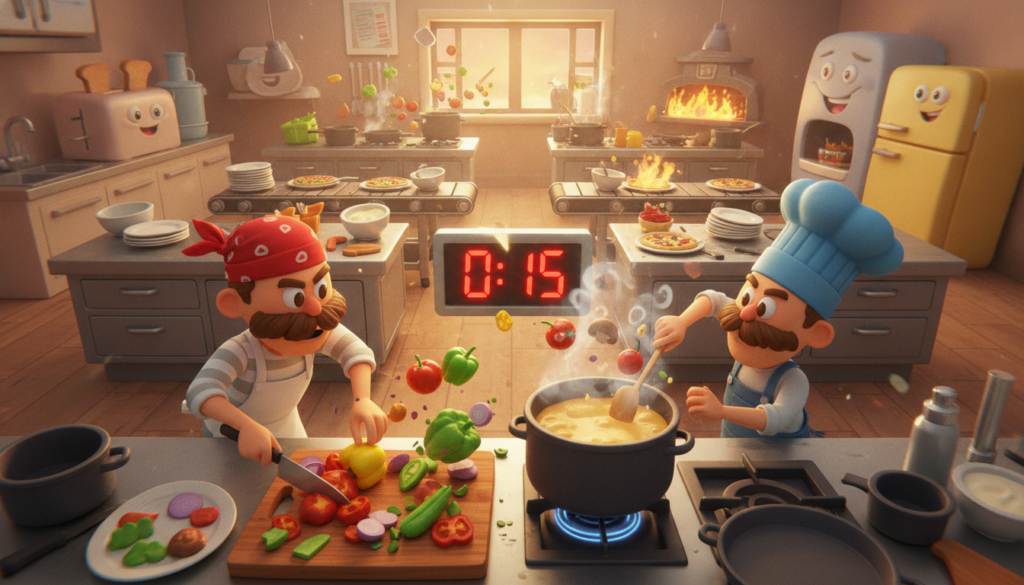
The game mechanics are the beating heart that transforms a simple task into a frenetic adventure. Every element is designed to test your agility and adaptability in increasingly hostile environments.
Kitchen workflow
To succeed, you must master the preparation cycle, which spans everything from gathering ingredients to the final delivery. The workflow requires every player to know exactly which step to perform to avoid bottlenecks.
Anúncios
In a kitchen game, efficiency is measured by how quickly dishes leave the counter. Therefore, staying organized is vital to avoid losing your rhythm when demand spikes.
Time and order management
Time management is the central pillar supporting player progression. Orders pour in ceaselessly, creating constant pressure that demands total focus during every available second.
Knowing how to prioritize which dishes to finish first offers a strategic advantage. Without effective time management, achieving top scores in the most demanding levels is impossible.
The importance of player communication
Communication among participants isn’t just a bonus feature; it is an absolute necessity for keeping the kitchen running without major errors. In a multiplayer setting, chaos can quickly ensue if the team isn’t clearly aligned.
Coordinating who chops, who cooks, and who washes the dishes prevents collisions and wasted resources, elevating the gameplay and making the multiplayer experience memorable and challenging for everyone involved.
The most unusual and challenging settings
In Overcooked, the environment is an adversary just as relentless as the kitchen timer.
The developers created scenarios that challenge both logic and player stability at critical moments, turning the simple task of cooking into a chaotic adventure.
These challenging levels demand far more than just manual dexterity, testing your ability to stay calm while the surrounding environment tries to sabotage every dish you prepare.
Moving kitchens and unstable platforms
Some of the most memorable stages place chefs in constantly moving kitchens.
Unstable platforms force players to rethink their delivery routes at every turn, as a path that was safe a moment ago might suddenly be on the other side of a chasm.
These mechanics require players to synchronize their movements with the rhythm of the environment. If you aren’t paying attention to how the countertops shift, you risk seeing your ingredients fall into the void, wasting precious time.
Environmental obstacles that test your patience
Beyond movement, the game introduces various obstacles that disrupt the workflow, serving as a constant reminder that the environment is a dangerous enemy. Among the most common challenges, we can highlight:
- Fire that breaks out unexpectedly in prep areas.
- Rats that steal ingredients left on tables.
- Slippery ice that alters movement speed.
- Doors that open and close, blocking narrow corridors.
Rapid adaptation to layout changes
The ability to quickly adapt to layout changes is an essential requirement for success.
The kitchen often splits or changes its configuration mid-match, demanding flawless communication among the team.
Mastering these game mechanics requires practice and constant observation, keeping in mind that strategic flexibility is what separates amateur chefs from the masters capable of conquering the game’s most complex and challenging levels.
Essential strategies for mastering the kitchen
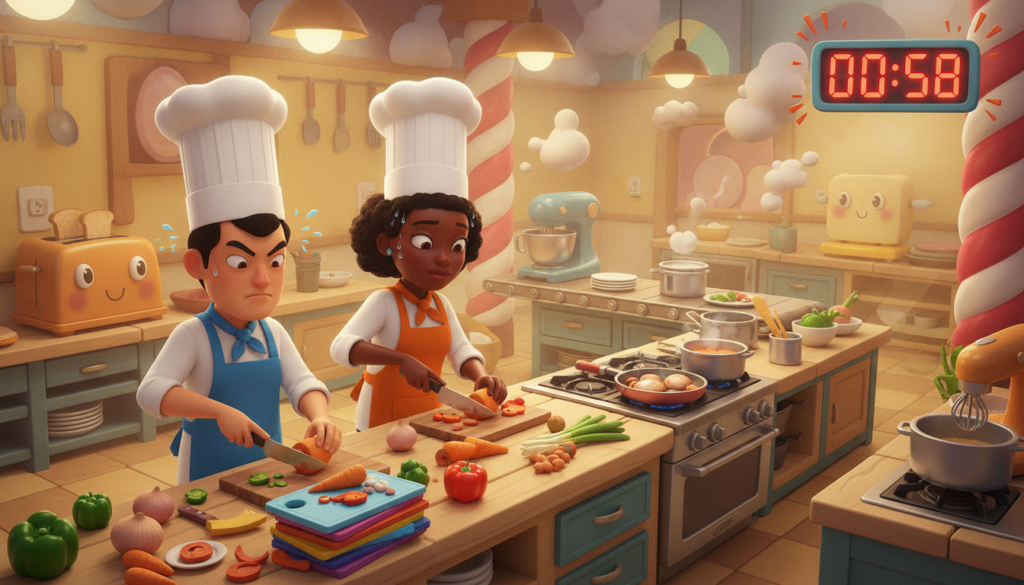
Turning culinary chaos into an efficient system is the secret to any successful chef. When the pressure mounts, the difference between failure and success lies in the ability to maintain order amidst the confusion.
Efficient division of tasks
The best way to avoid confusion is to define clear roles for every team member right from the start. When everyone knows exactly what they need to do, productivity increases dramatically.
- One player focuses exclusively on chopping ingredients.
- Another team member handles the cooking and plating.
- Someone must be responsible for cleaning dirty dishes to maintain the workflow.
Optimizing Workspace
A good strategy involves knowing every inch of the kitchen. Organizing ingredients near prep stations reduces travel time and improves time management during rounds.
Avoid crossing paths with other players to prevent losing precious seconds. Keeping the environment clean and organized allows the chef to perform tasks much more efficiently.
Handling the Stress of Backlogged Orders
When orders start piling up, it is common to feel the weight of culinary chaos. The key is to stay calm and focus on prioritizing the most urgent tasks.
Take a deep breath and assess which dishes are about to expire. Effective time management allows you to deliver the right orders without sacrificing service quality, ensuring your team achieves the highest score.
The Importance of Teamwork
The real magic of this game happens when the group functions like a well-oiled machine. Success in each level directly reflects the quality of teamwork displayed by the players during the match.
This experience turns a simple gaming session into a moment of genuine connection among friends. When everyone is in sync, the kitchen chaos becomes a fun and surmountable challenge.
Synchronization and Movement Coordination
Coordination is the pillar that supports progress in any cooperative mode. Players who can anticipate each other’s movements avoid unnecessary collisions that slow down service and hurt the final score.
Maintaining a steady pace requires paying close attention to what your partner is doing at any given moment. When synchronization fails, the workflow is interrupted, triggering a domino effect of delayed orders.
Avoiding Collisions Between Players
In cramped kitchens, physical space is a limited resource that must be respected. Character collisions are a common mistake that can be avoided through clear communication and strategic positioning.
Try establishing fixed routes for each player within the level. By defining who moves through which corridor, you drastically reduce the chances of accidental blockages during intense multiplayer action.
The art of delegating roles under pressure
Delegating tasks under pressure is a skill developed through constant practice and mutual trust. During high-pressure moments, it is essential that each chef knows exactly what their immediate responsibility is.
Trusting your partner allows you to focus on your task without worrying that the other side of the kitchen is being neglected.
Over time, this division of roles becomes second nature, elevating the level of your group gameplay.
Conclusion
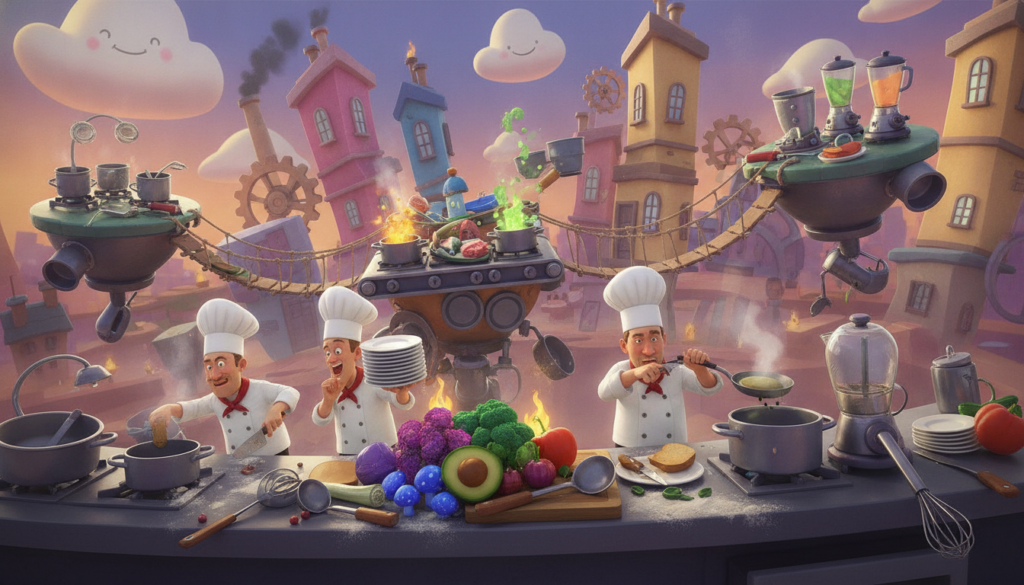
Overcooked turns the kitchen into a vibrant stage where every second counts toward success, demanding far more than just nimble fingers.
The secret to beating the toughest levels lies in the team’s strategy. Organizing tasks ensures dishes are served on time without causing confusion among the chefs.
Teamwork is the foundation of all the fun during gameplay. When everyone communicates well, the chaos transforms into an enjoyable and surmountable challenge.