Anúncios
Imagine a world where virtual reality helps unlock the potential of children with motor delays and developmental disorders. Virtual reality (VR) is changing pediatric therapy, combining technology with rehabilitation in new ways. This approach makes therapy more engaging and helps therapists meet the needs of young patients.
We will dive into the world of pediatric VR therapy. We’ll look at its applications, benefits, and future directions. Our goal is to help children grow and develop.
Anúncios
Introduction to Pediatric Therapy and Developmental Disorders
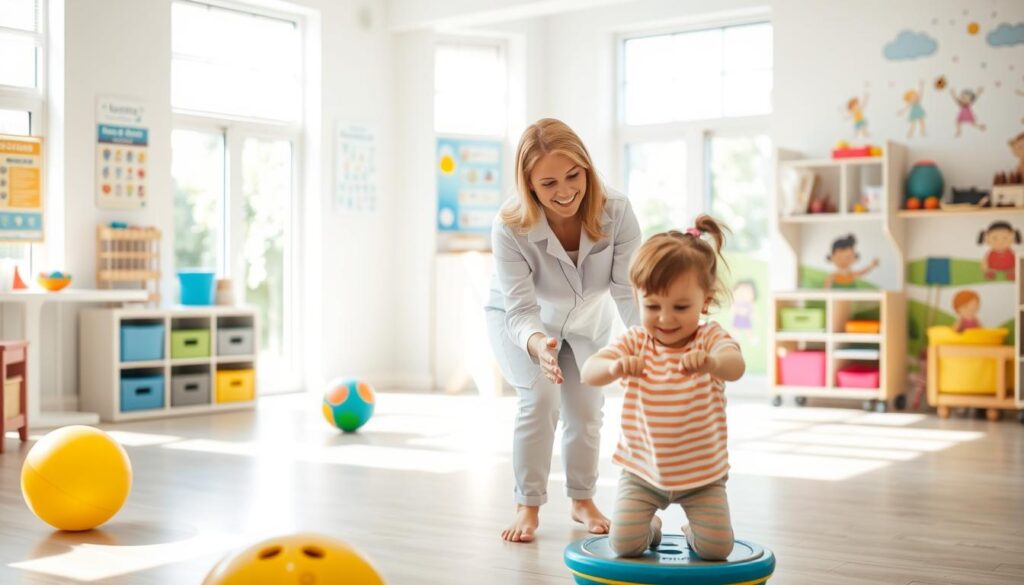
Pediatric therapy helps kids overcome developmental challenges. These challenges include autism, cerebral palsy, and ADHD. These conditions make it hard for kids to reach important milestones and can affect their daily life.
The main goal of pediatric therapy is to support kids in their daily activities. It helps improve physical, cognitive, and emotional skills. Knowing about pediatric therapy is key to finding new ways to help kids.
Anúncios
Understanding Developmental Disabilities in Children
Developmental disabilities are conditions that affect many areas of a child’s life. They can impact physical abilities, learning, language, or behavior. Examples include ADHD, autism spectrum disorders, and intellectual disabilities.
Many developmental disabilities cause problems with motor function. This means kids might have trouble with coordination and moving. It can make everyday tasks hard and affect their social life.
It’s important for doctors and caregivers to understand these disabilities well. Knowing each child’s challenges helps create special programs for them. These programs aim to improve motor skills, social interaction, and overall happiness.

The Importance of Motor Skills in Daily Life
Motor skills are key for kids as they move through their daily lives. They help kids control their movements, big or small. This shapes how they interact with the world around them.
These skills are crucial for doing everyday things like getting dressed, eating, and playing. They help kids master the basics of movement.
Gross and fine motor skills are vital for moving around and doing precise tasks. Gross motor skills are about big movements like running and jumping. Fine motor skills are for tasks that need precision, like writing or using utensils.
Both types of skills work together. Success in daily activities often depends on having both.
Problems with motor skills can make things tough, especially in school and with friends. Kids might get frustrated and feel less confident. This can affect their feelings and thinking.
Helping kids with motor skills early on is important. It helps them become more independent and makes it easier for them to connect with others.
Understanding how important motor skills are shows we need to find good ways to help kids with these issues. Improving motor skills lets kids enjoy more of life. It helps them do well in many parts of their daily routines.
Overview of Traditional Therapeutic Approaches
Traditional therapy for kids with motor delays focuses on physical rehab. It uses repetitive exercises to boost muscle strength and coordination. Kids get one-on-one physical therapy, which helps track their progress.
Occupational therapy is also key, focusing on daily activities and skills. It uses sensory integration to help kids better handle sensory information. These methods can be costly and their success depends on how well kids engage.
Even with their benefits, traditional therapies sometimes struggle to keep kids motivated. This shows the need for new ideas, like virtual reality, to help these treatments.
What is Virtual Reality (VR) Technology?
Virtual reality (VR) technology is a big leap in immersive tech. It makes computer-generated worlds that feel real. Users can interact with these digital spaces, feeling like they’re really there.
In therapy, VR is a powerful tool. Therapists can create special simulations for each patient. This helps meet their unique needs and goals.
Patients can practice in a safe space with VR. They can try out activities that fit their treatment plans. This makes them more eager to join in their therapy.
VR gives real-time feedback, which helps a lot. It’s key for learning new skills and overcoming challenges.
VR has changed pediatric therapy for the better. It offers new ways to help kids with motor delays or developmental disorders. The fun and engaging environments help reach therapy goals, making old ways of rehab seem outdated.
Applications of VR in Pediatric Therapy
VR applications bring new life to pediatric therapy, turning old methods into fun experiences. They help with motor skills, thinking, and facing fears, all tailored for kids. Kids get to explore virtual worlds, making therapy exciting and engaging.
VR makes learning balance and coordination fun. Kids can run through virtual parks or obstacle courses. It’s like playtime, not work, which makes them want to learn more.
VR also helps kids get used to medical procedures without fear. It shows them what to expect, making them feel more comfortable. This makes therapy a better experience for them.
Benefits of Pediatric VR Therapy for Motor Delay
Pediatric VR therapy offers many benefits for kids with motor delays. It makes therapy more fun and engaging. Unlike old-school methods, VR creates a world where kids can help themselves get better.
Improved Engagement Through Interactive Environments
VR’s interactive worlds grab kids’ attention and encourage them to explore. This makes therapy fun and keeps kids coming back. When kids are into it, they do better and make more progress.
Real-Time Feedback for Enhanced Learning
VR also gives kids instant feedback on their progress. They see how they’re doing as they go. This helps them learn faster and get better at motor skills, making therapy rewarding.
How VR Technology Meets Therapeutic Needs of Children
VR technology is changing how we help kids with motor delays and developmental disorders. It lets us create therapy sessions that fit each child’s needs. This way, VR keeps challenges fun and just right for them.
VR lets kids do cool activities in virtual worlds. These activities help them learn and grow. They feel proud of themselves, which keeps them excited about therapy.
VR therapy works on both body and mind. Kids love VR more than old-school therapy. This makes them want to keep learning and growing.
VR is a key part of helping kids in therapy. It makes therapy fun and personal. This helps kids grow and learn in a way that feels like play.
Variety of VR Programs Available for Motor Skills Development
The world of VR programs for motor skills has grown a lot. These programs offer fun activities that help kids improve coordination and balance. They also work on fine motor skills through games.
The RAPAEL Smart Kids program is a great example. It uses games to help kids with motor skills. It makes learning fun and keeps kids interested in their development.
VR programs come in many types, each focusing on different skills. Some focus on teamwork, while others are for solo practice. They are designed to fit many abilities and interests.
| VR Program | Description | Focus Area |
|---|---|---|
| RAPAEL Smart Kids | An interactive platform with engaging games focused on motor rehabilitation. | Fine and gross motor skills |
| VR Physio | A VR program that assists in physical therapy through fun challenges. | Coordination and balance |
| Oculus Fitness | A fitness program using VR to enhance movement while exercising. | Overall physical coordination |
| Virtual Speech | Merges speech therapy with motor skills improvement through immersive activities. | Communication and fine motor skills |
These programs show a big effort to help kids with motor skill challenges. VR games make learning fun and help kids reach their goals.
Research Findings on VR Interventions for Motor Delays
Recent studies show big steps forward in using virtual reality (VR) for kids with motor delays and developmental disorders. Many clinical studies have been done in different places. They all point to VR’s key role in boosting motor skills and abilities in young patients.
Clinical Studies Supporting VR Efficacy
VR therapy has shown great results in clinical studies. These studies show how VR grabs kids’ attention, making them more engaged in therapy. This leads to better motor coordination, balance, and physical activity in many kids.
Patient-Centered Outcomes and Feedback
Studies on kids in VR therapy offer important insights. Feedback from kids and their families often mentions how much fun they have during therapy. This fun seems to make them more motivated and stick to their therapy plans. This supports VR’s role in helping kids in therapy.
Challenges and Limitations of VR in Therapy
VR therapy is promising for kids, but it has its challenges. One big issue is the cost of the equipment. This can be too expensive for many clinics and therapists.
Therapists need a lot of training to use VR therapy well. They must learn how to make experiences that help each child. This can be hard, especially in places with few resources.
Space is another problem in clinics. They need enough room for kids to move safely during VR sessions. Not all kids can handle VR, especially those with sensory or cognitive issues. It’s important for therapists to know these challenges to use VR therapy well.
Future Directions of Pediatric VR Therapy for Motor Delay
Technology advancements are key in the future of pediatric VR therapy. New tools and methods are being developed to help kids with motor delays. For example, haptic feedback systems aim to make therapy more real and engaging.
These improvements will help tailor treatments to each child’s needs. This means kids will get therapies that fit them best.
As VR tech gets easier to use, more healthcare providers will start using it. This will bring a variety of new treatments to help kids. Making these therapies more accessible could greatly improve how well kids do in treatment.
Children might find therapy more fun and effective. This could lead to better results and more independence for kids.
Integration of VR in Clinical Practice
Adding VR to clinical practice needs careful planning, especially for kids. Doctors must create a plan that fits with current treatments. This ensures VR works well with what they already do.
It’s also key to train healthcare workers on using VR. This training helps them use VR in therapy sessions effectively.
Checking how well VR works is very important. Doctors should compare VR results with traditional methods. This helps see if VR really helps kids with motor skills and keeps them interested.
Setting clear rules helps doctors use VR confidently. This leads to better therapy for kids. With the right training and planning, VR can change how therapy is done.
| Aspect | Traditional Therapy | VR Integration |
|---|---|---|
| Engagement Level | Moderate | High |
| Real-Time Feedback | Limited | Comprehensive |
| Customizability | Standardized | Personalized |
| Therapeutic Environment | Physical Clinic | Virtual Environments |
| Patient Motivation | Adequate | Enhanced |
Case Studies Highlighting Successful VR Applications
Many case studies show how VR can change therapy for kids. For example, kids with cerebral palsy got better at moving thanks to VR. They did special VR exercises that helped them balance and move better.
Another group of kids with developmental delays got better at small movements with VR. These stories show how VR can help kids in many ways.
These studies prove VR therapy works well for kids. It makes them more interested and helps them get better faster. More success stories mean more VR options for kids with different needs.
| Condition | VR Application | Outcome |
|---|---|---|
| Cerebral Palsy | Custom VR exercises | Improved balance and coordination |
| Developmental Delays | Interactive VR platforms | Enhanced fine motor skills |
| Autism Spectrum Disorder | Social interaction simulations | Better engagement in social settings |
Parental Guidance on VR Use in Therapy
Parents are key to making VR therapy work for kids. Their help can make the therapy more effective. It’s important to pick VR games that fit the child’s needs.
Make sure the child enjoys the experience. This makes therapy more fun and helpful.
It’s important to keep an eye on how much time the child spends on VR. Create a schedule that balances therapy with other activities. Joining in on VR sessions can make it feel more like fun than work.
Talking regularly with the child’s therapist is also crucial. Discuss how the child is doing and any problems with VR. Therapists can offer great advice to help parents and kids get the most out of VR therapy.
Conclusion
VR technology is changing pediatric therapy, especially for kids with motor delays and developmental disorders. It makes therapy more fun and effective. This is a big step towards making treatment plans that really fit each child’s needs.
The future of therapy for kids looks bright, thanks to VR. New VR tech will help make therapy even better. It will help kids get the right help at the right time, making their journey easier.
Using VR in therapy is a big step forward. It helps healthcare providers help kids in new ways. As we keep learning and growing, we’ll make therapy even better for kids with delays and disorders.
FAQ
What is virtual reality (VR) therapy for children with developmental disorders?
VR therapy for kids uses immersive tech to create fun environments. Here, they can practice motor skills and do therapy activities. It makes treatment more engaging and effective.
How does VR technology benefit pediatric therapy?
VR tech helps by offering interactive, controlled spaces. It boosts patient engagement and gives real-time feedback. It also meets the special needs of kids with motor delays and developmental disorders.
What types of developmental disorders can be addressed with VR therapy?
VR therapy helps with autism, cerebral palsy, and ADHD. It improves motor skills and functional abilities in kids with these disorders.
How do traditional therapeutic approaches compare to VR therapy?
Traditional therapy uses repetitive exercises and one-on-one sessions. It can be costly and may not keep kids engaged. VR therapy, however, is more engaging and can lead to better results.
What are some examples of VR programs designed for motor skills development?
Programs like RAPAEL Smart Kids use game scenarios to improve coordination and fine motor skills. They are tailored to meet the needs of different children.
What challenges exist in implementing VR therapy in pediatric practice?
Challenges include high costs, the need for therapist training, and limited space in clinics. These issues make it hard to use VR therapy widely.
What advancements are expected in VR therapy for pediatric patients?
Future VR therapy may include better haptic feedback and AI-driven programs. It will offer more personalized experiences, improving treatment results for kids.
How can parents support their child’s VR therapy at home?
Parents can help by choosing the right VR games and monitoring time. They should encourage their child to participate actively. Talking with therapists about progress is also key to getting the most from therapy.