
Anúncios
Have you ever thought about using virtual reality (VR) games for rehabbing sports injuries? VR is changing how we treat injuries. It makes recovery fun and highlights the need for expert help.
VR games mix fun gaming with personalized rehab plans. This new method could change how we deal with injury recovery. We’ll look into how VR is improving rehab results, keeping patients interested, and shaping sports medicine’s future.
Anúncios
Understanding Chronic and Severe Sports Injuries
Chronic and severe sports injuries are big challenges for athletes. Chronic injuries come from doing the same motion over and over. This can hurt muscles or joints, leading to problems like tendonitis or stress fractures. Severe injuries happen suddenly and can be very serious, like ligament tears or broken bones.
What causes chronic injuries? It’s often because of not warming up enough, not resting enough, or using the wrong techniques. Severe injuries can happen during high-impact sports, like falls or collisions. It’s key to know the signs of these injuries. Chronic injuries might cause ongoing pain or swelling. Severe injuries can cause sudden, sharp pain and make it hard to move.
The effects of chronic and severe sports injuries go beyond just physical pain. Recovery can take a long time, affecting an athlete’s performance and mental health. Reports from sports organizations, like the UEFA injury report, show these injuries are becoming more common. This makes it even more important to know about prevention and treatment.
Anúncios
The Role of Rehabilitation in Sports Injury Recovery
Rehabilitation is key in getting over sports injuries, both long-term and severe. It uses many therapeutic methods to help athletes get better. These include physical therapy to build strength and mobility, mental support, and exercises made just for each athlete.
Good rehabilitation helps athletes get back to their top form. It includes pain management to lessen discomfort. This way, athletes can focus on their recovery goals. They get a full recovery that heals their body and mind.
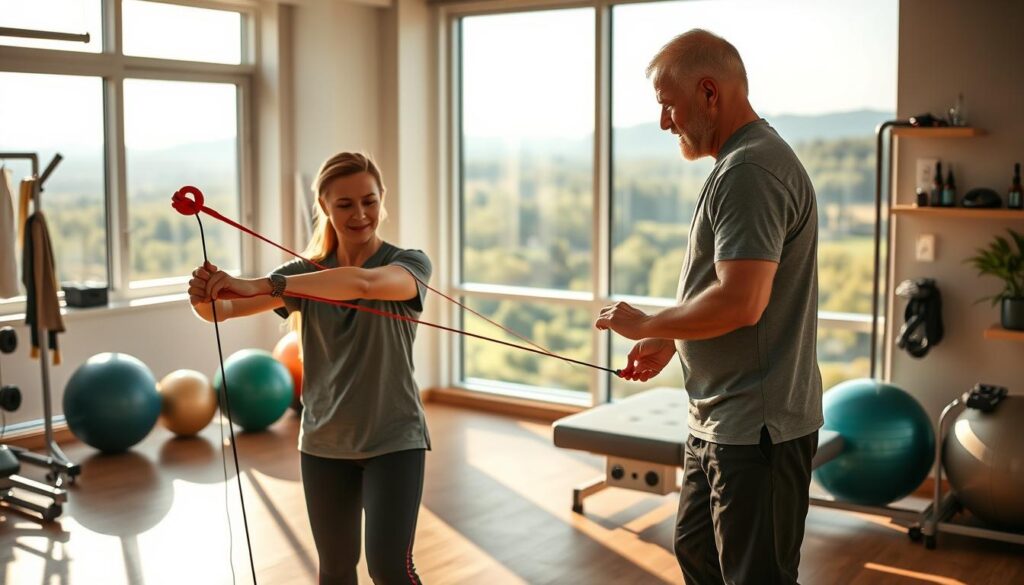
Creating a good rehab plan needs teamwork. Healthcare pros, coaches, and athletes work together. This team effort makes sure the rehab stays on track and meets each athlete’s needs. Through these efforts, athletes build a strong base for their return to sports, reaching their recovery goals.
Introduction to Virtual Reality in Rehabilitation
Virtual reality technology has changed how we approach rehabilitation. It lets patients practice in environments that feel real. This helps them work on both physical and mental skills.
These immersive settings are made possible by VR. They offer a personalized experience that traditional therapy can’t match. This makes rehabilitation more effective and engaging.
There are many types of VR systems for rehab. High-end systems offer detailed interactions, while cheaper game-based systems make therapy more accessible. Both aim to make therapy fun and effective.
The future of VR in rehab looks bright. It’s getting better and being used in more ways. VR makes treatment more engaging and realistic, leading to better results.
Benefits of VR Games for Chronic and Major Sports Injury Rehab
VR games are changing how we do rehab for chronic and major sports injuries. They make the process more fun and engaging. Plus, they can be tailored to fit each patient’s needs perfectly.
Enhanced Engagement and Motivation
VR games are great at keeping patients interested. Old rehab methods can get boring and make people lose motivation. But VR makes rehab fun and rewarding, so patients look forward to it.
Personalized Rehabilitation Programs
VR lets therapists make rehab plans that really fit each person. They can change the exercises based on how well the patient is doing. This makes rehab more effective and helps patients get better faster.
Improved Outcomes in Recovery
Studies show VR rehab works better than traditional methods. It helps patients get back to normal faster. As VR tech gets better, it’s going to change sports medicine for the better.
Types of VR Technologies Used in Rehabilitation
Many VR technologies help with sports injury recovery. They fall into two main groups: high-end multisensory systems and game-based systems. Each has its own benefits and uses in therapy.
High-End Multisensory Systems
High-end multisensory systems offer deep, immersive experiences for intense rehab. They use advanced VR to mimic real-world settings, helping patients recover faster. For instance, the HTC Vive creates an interactive space for targeted exercises.
The RAPAEL Smart Glove focuses on upper body rehab with fun, gamified tasks. These systems are great for those needing detailed, intense training.
Game-Based VR Systems
Game-based systems like Nintendo Wii and Xbox Kinect add fun to rehab. They use familiar gaming settings to keep patients motivated. Interactive games make rehab more enjoyable and engaging.
These systems offer exercises that fit different injuries, blending fun with therapy. This makes rehab more effective and enjoyable.
The Effectiveness of VR in Upper-Extremity Rehabilitation
Virtual reality is a powerful tool in upper-extremity rehabilitation. It shows great potential to improve outcomes. Studies have found that VR is more effective than traditional methods, especially in managing pain and improving mobility for those with upper-extremity injuries.
Meta-analyses have shown that VR in rehabilitation programs leads to better results. Patients can do daily activities more easily. VR makes therapy sessions more fun and engaging.
VR also offers real-time feedback, which helps patients learn and interact better. This feedback makes it easier for them to see their progress. It helps them adjust their therapy plans more effectively.
| Study | Participants | VR Effectiveness | Traditional Method Outcomes |
|---|---|---|---|
| Study A | 25 | 85% improvement in pain levels | 60% improvement in pain levels |
| Study B | 30 | 75% improvement in mobility | 50% improvement in mobility |
| Study C | 20 | 80% satisfaction in engagement | 55% satisfaction in engagement |
VR in upper-extremity rehabilitation is a big change. It leads to better results for patients. It sets a new standard in the field.
Evidence Supporting VR Games in Sports Injury Rehab
Recent studies show VR is effective in managing pain and improving function for sports injury patients. This new approach is gaining attention, with researchers looking into its role in rehab.
Study Findings on Pain Management
Studies link VR to less pain in patients. VR’s immersive world takes their mind off pain during exercises. This leads to lower pain levels, making recovery more positive.
Impact on Functional Outcomes
VR boosts functional outcomes, especially in upper-body function and mobility. It also makes patients more likely to stick to their rehab plans. This leads to better and more motivated recovery.
| Study | Key Findings on VR in Pain Management | Functional Outcomes |
|---|---|---|
| Study A | Patients reported a 30% reduction in pain levels using VR | Significant improvement in upper-extremity mobility |
| Study B | Enhanced pain distraction during rehabilitation sessions | Increased adherence to therapy protocols by 40% |
| Study C | Improved overall patient satisfaction with therapy | Better return-to-sport functionality |
VR Games for Chronic and Major Sports Injury Rehab
VR games are changing how we recover from sports injuries. They’re fun and tailored to meet specific needs. This means each athlete gets a rehab plan that fits their injury perfectly.
Specific Games Tailored for Different Injuries
Now, sports rehab includes VR games for common injuries. For example:
- Stroke Rehabilitation: Games that help with hand-eye coordination and moving arms.
- Knee Injuries: Games that boost strength and flexibility in the lower legs.
- Shoulder Rehab: VR games that improve shoulder movement and muscle strength.
Integration with Traditional Rehabilitation Methods
VR tech is being used alongside traditional rehab methods. This mix offers a complete recovery plan. Athletes get:
- More motivation during their recovery.
- More varied exercises to keep them interested.
- Instant feedback to track their progress.
This approach speeds up healing and makes rehab more fun and effective.
Specialized Guidance in VR Rehabilitation
In VR rehabilitation, getting help from experts is key. These professionals make sure patients use new tech safely and well. They adjust plans to fit each person, making sure they feel safe and interested.
The Role of Trained Professionals
Experts guide the healing process. They look at what each patient needs and tailor VR therapy. Their knowledge helps make VR therapy work best for each person.
Continuous Feedback and Support
Experts keep in touch with patients to offer help. This keeps patients motivated and focused. Their support makes the journey through VR therapy better and more effective.
Accessibility and Cost-Effectiveness of VR Rehabilitation
Virtual reality rehabilitation (VR rehab) is getting easier to use. It meets the needs of many patients. As more centers use VR, it becomes cheaper for patients to get help.
Studies show VR rehab cuts costs compared to old methods. It makes treatment more effective and engaging. This helps more people get the care they need.
VR systems for home use make things even better. Patients can recover in their own space. This means more people can get the care they need, leading to better health for all.
Challenges and Limitations of VR in Rehabilitation
VR is becoming more popular in sports injury recovery. But, there are still big challenges. One major issue is the high cost of VR systems. This makes it hard for healthcare places to use VR, keeping it out of reach for many patients.
Another big problem is cybersickness. Some people get sick or feel bad in virtual worlds. This can make it hard for them to stick with VR, which is key for better recovery.
Learning to use VR takes time and effort. Both doctors and patients need to get trained. Without good training, using VR can be tough, making recovery harder.
It’s also important to make VR treatments more standard. Right now, different ways of using VR can lead to different results. Having clear guidelines would help make VR a more reliable part of rehab.
Future Directions for VR in Sports Rehabilitation
The future of VR in sports rehab is very exciting. New tech, like artificial intelligence, is making rehab more personal and effective. This means patients will get experiences that fit their needs, helping them heal faster.
There’s a lot of research to be done in VR for sports injuries. Studies can show how VR helps different injuries. It also looks at using VR for remote care, making it easier for doctors to help patients from anywhere.
Patient Satisfaction with VR Rehabilitation Approaches
Patient satisfaction is key to the success of rehab programs, especially with VR rehab. Many patients find VR to be engaging, which boosts their experience. Studies show that patients are happier with VR rehab than traditional methods, thanks to its immersive nature.
VR technology offers a personalized rehab experience that meets individual needs. Users get motivated and feel in control with VR games made for their recovery. This feeling of empowerment boosts patient satisfaction and helps them stick to their rehab plans.
Research shows a strong link between patient satisfaction and better rehab results. Happy patients are more likely to stay committed to their recovery. This leads to faster and more effective results. VR rehab creates a positive feedback loop where patients enjoy rehab and see real health improvements.
Real-World Applications of VR in Sports Medicine
Virtual reality is changing sports medicine in big ways. It helps with both getting better after injuries and improving performance. Studies show VR is great for recovering from ACL tears and shoulder surgeries.
It makes recovery faster and helps manage pain better. This lets patients do more in their rehab, which is good for them.
One study found athletes with ACL injuries felt less pain after using VR. VR makes rehab fun and keeps patients motivated. It lets them practice real-life activities safely.
VR is also used to help athletes perform better and avoid injuries. Coaches use it to check how athletes move and work on their skills. This makes VR a key part of sports medicine, helping in many ways.
Conclusion
VR rehabilitation is changing how we handle sports injuries. It uses fun virtual reality games to keep patients motivated. This method also creates recovery plans that fit each person’s needs.
Experts help make the process even better. They guide patients every step of the way. This support is key to a successful recovery.
Looking back, VR’s role in sports injury rehab is clear. New studies show it’s a valuable tool in recovery. It’s making rehab better and more accessible for everyone.
We need to keep studying and improving VR rehab. This will make it even more useful in treating sports injuries. The future of VR rehab looks bright, with new ways to help athletes and patients.
FAQ
What types of injuries can benefit from virtual reality rehabilitation?
Virtual reality helps with chronic injuries like tendonitis and stress fractures. It also aids in severe injuries such as ligament ruptures and broken bones. These injuries can really hurt an athlete’s performance and life quality.
How does virtual reality enhance patient engagement during rehabilitation?
Virtual reality makes rehab more fun and interactive. It turns exercises into games, making patients more eager to do them. This leads to better results and happier patients.
Are there different types of virtual reality systems used in rehabilitation?
Yes, there are many VR systems for rehab. High-end systems like the HTC Vive offer deep experiences. Cheaper options like Nintendo Wii and Xbox Kinect are also effective and fun.
What evidence exists supporting the effectiveness of VR in rehabilitation?
Studies show VR helps with pain and improves function in patients. It’s better than old-school rehab methods, especially for arm injuries.
How do VR games complement traditional rehabilitation methods?
VR games add variety to rehab, making it more fun and effective. They work well with traditional methods, offering a mix of exercises that keep patients engaged.
What role do trained professionals play in VR rehabilitation?
Experts are key in VR rehab. They help patients use VR systems, adjust programs, and give feedback. Their help makes rehab more effective and enjoyable.
What challenges do VR rehabilitation technologies face?
VR rehab faces high costs, issues with sickness, and training needs. Standardizing protocols is also a challenge to ensure consistent results.
How accessible are VR rehabilitation technologies?
VR rehab tech is getting cheaper, making it more available. It can cut costs and reach more patients, improving access to care.
What do recent studies say about patient satisfaction with VR rehabilitation?
Patients love VR rehab, finding it more engaging than traditional methods. This higher satisfaction leads to better results and more consistent care.
What is the future potential of VR in sports rehabilitation?
VR’s future in sports rehab looks bright. AI could make programs even more tailored. There’s also a lot of research to be done on using VR for different injuries.